One of the initial priorities for my ‘Evolving the Ecosystem’ project was to learn about some of the key ideas and concepts that underpin the study of cancer as an ecosystem. I also want to get to grips with how they might be applied to the work of the teams at the LCH. So my first series of meetings at the LCH have been primarily focused on researchers at the Institute of Cancer Resarch (ICR) who have generously explained the thinking behind their research, sharing ideas and research papers and painstakingly explaining complex biology to a non biologist. First off, I am very grateful to all who met with me from the Biology of Childhood Leukaemia team and from the Centre for Evolution and Cancer teams and who spent time with me on my visits in late September and early October. I am not planning to record the content of each of the conversations here, just to say that they were incredibly illuminating and introduced me to a wealth of ideas around cancer ecosystems.
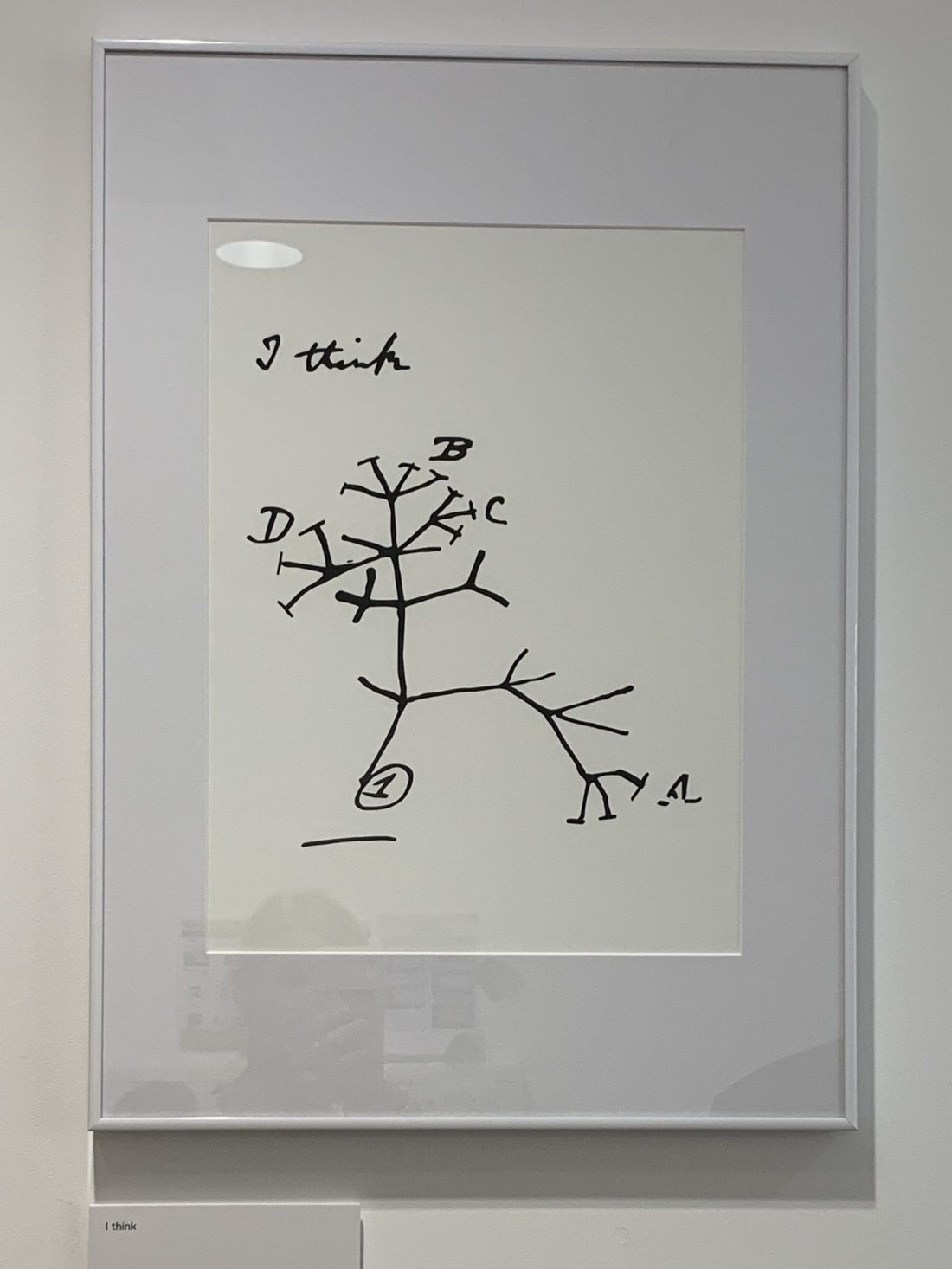
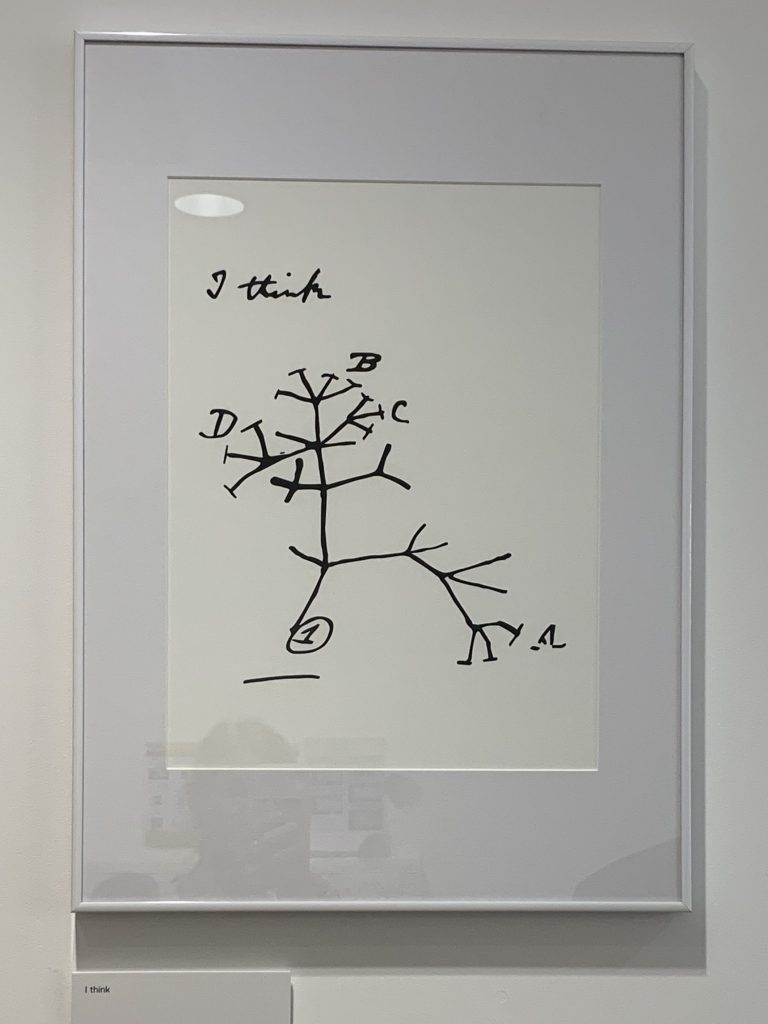
Darwin’s ‘I think’, mounted outside offices at the ICR
From these discussions I have started to draw out some of the concepts that I think may be useful going forward to inform my artwork. Scattered through future posts I will be sharing selections of the concepts and metaphors I am encountering, with my interpretation of their meaning in the context of cancer, in the context of organisation, or better still, both. I would emphasise here, though, that all the interpretations I am sharing are mine. They may be drawn from conversations with researchers and others but if they are full of errors or misunderstandings, those are entirely my own responsibility.
My first visit to the Institute of Cancer Research was utterly fascinating both in terms of developing an understanding of key concepts about the ecology of cancer and of getting a sense of the London Cancer Hub itself. I was lucky enough to meet with researchers from two different teams and was slightly punch drunk with ideas and information by the end of the day. Rather than write about the meetings here one by one, I plan to use this blog to think about some of the concepts and ideas and how they might translate into relevant artwork. These will unfold over future posts. This post is actually about my first visit to the site in concrete terms, how i found it, how it looked and how it felt to be there for the first time.
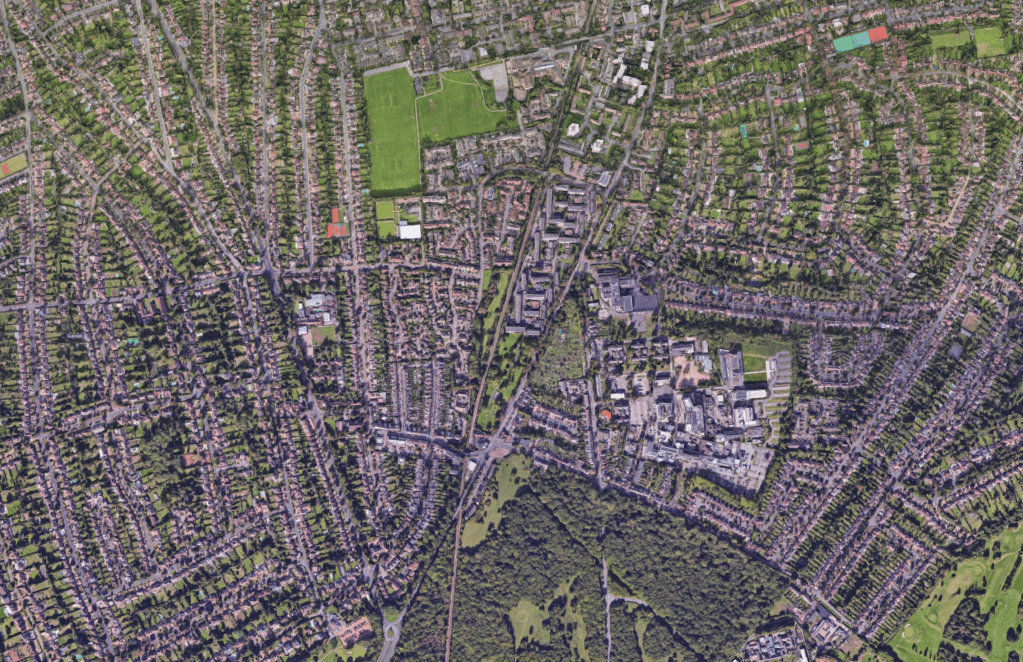
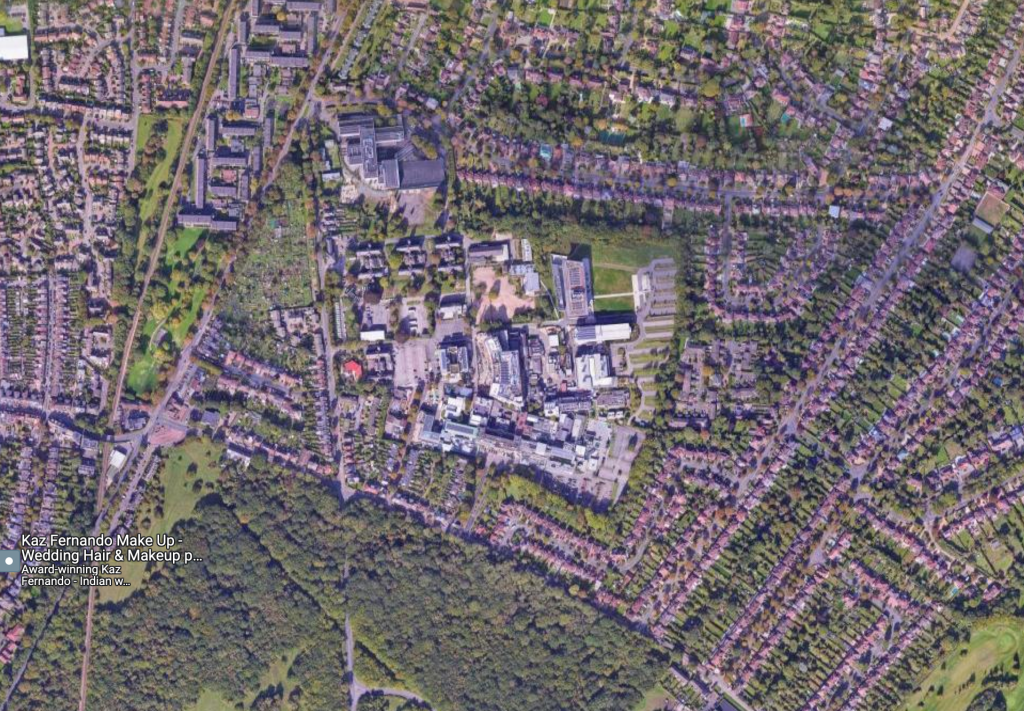
The LCH is near Belmont in Sutton. I was unfamiliar with my route to it by road, or the lie of the land around the LCH. I was surprised to come across the site as i was making my way through a warren of residential streets; the LCH nestles amongst the housing, mostly hidden from view.
The first buildings I saw as I came onto the LCH site (via the signposts to the ICR – there are a variety of access points) were some old brick Hospital buildings, presumably Victorian and presumably part of the Royal Marsden, past or present? The bulk of the original Royal Marsden on this site is actually midcentury, and was officially opened in 1963, but I couldn’t see much of that from my approach. I carried on past towards the ICR.
As I carried on down the access road, I came to the new ICR campus – brand spanking new buildings set in flat green parkland, some of which is earmarked for further development.
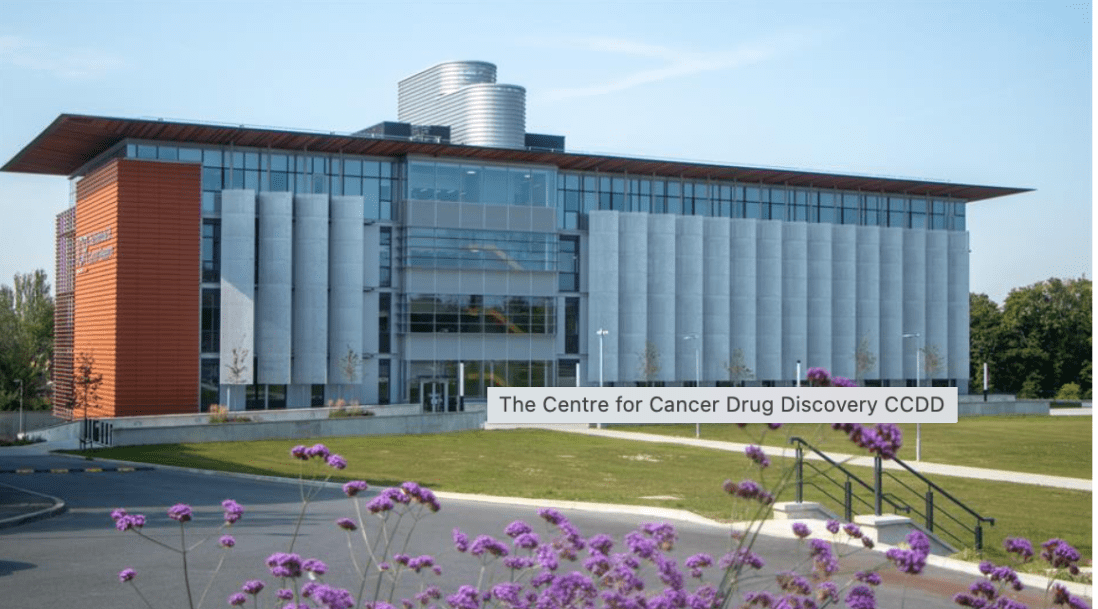
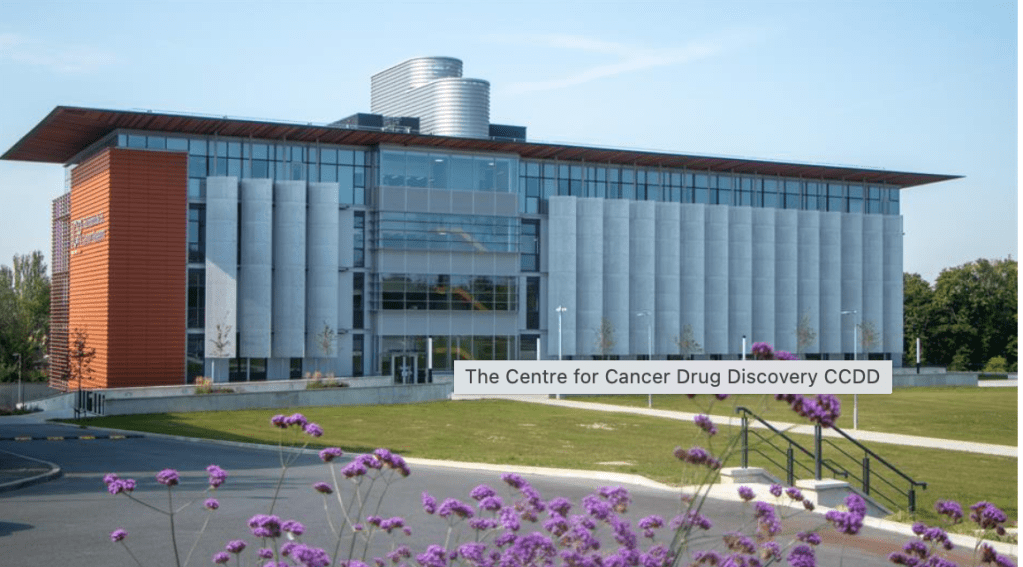
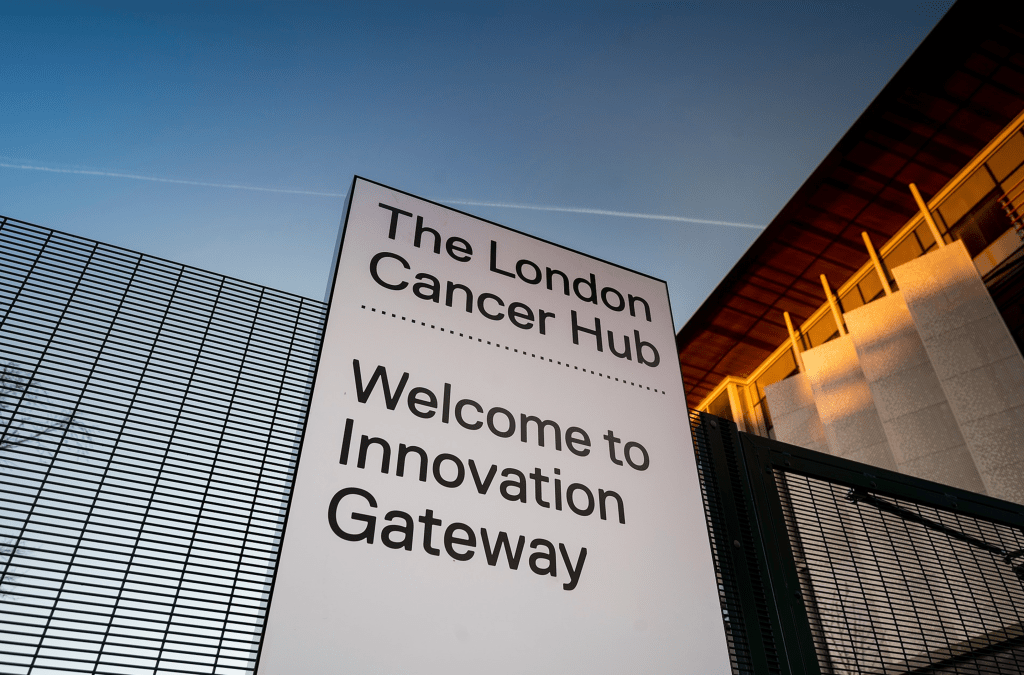
From windows of the Centre for Cancer Drug Discovery you can get something of the lie of the land. As well as being able to look over many of the different constituent parts of the Royal Marsden, it’s also possible to view the Innovation Gateway site – still very much a work in progress.
I spent pretty much all my day in the Centre for Cancer Drug Discovery where I had meetings in the purpose built meeting rooms as well as having a chance to talk to some researchers in their offices and to look at the labs used by the Cancer Evolution team.
As one might expect, everything was subject to secure access – you needed a pass to get into any of the buildings, and each of the office areas and also clearly the labs required a pass to access them. I was struck by the contrast between corridors and meeting rooms, which both felt a bit stark, mainly quiet and empty, and the offices and labs which were busier both with people and with papers or equipment. In the labs I got to borrow white and blue lab coats, depending on area, to adhere to the health and safety protocols. Odd how much it felt like dressing up.
As we walked around between meetings I was trying to get my bearings (and anyone who knows me knows that’s a feat – I could get lost in a small box) but even more, I wanted to take in the feel of the place. It’s much too early to do anything here other than record very first impressions, but those impressions are very much of a work in progress, a stitching together of the very old, the very new, and all the things that came in between. It gave me a real insight as to where the project stands at the moment; the LCH is not so much an entity as an idea that is beginning to take physical shape.
And that led me to question how far the LCH is also taking organisational shape – is that totally conceptual still or is it having any impact on working practice?
My residency at the London Cancer Hub will be spent working on a project I have called ‘Evolving the Ecosystem’. A central goal of the Institute of Cancer Research (ICR) strategy is to unravel the cancer ecosystem; cancers develop and grow very much as part of the environments of our bodies, and a priority for research at the ICR is to understand the mechanisms by which our individual or common internal bodily ecosystems govern whether cancers thrive or fail.
I was inspired by how the concepts we draw from ecology affect not only how a disease progresses, but potentially also how organisations thrive or fail in response to their environments. Below is an extract of the project proposal I put together to explain the research that I want to do whilst on this residency.
“Cancers have increasingly been seen as part of the complex ecology of the body rather than as diseases where rogue cells or tumours can be understood in isolation. Research scientists and clinicians are now focusing on investigating the characteristics and mechanisms of this ecology to find new ways to control or eliminate cancer. The conceptual framework of the ecology of cancer – and how to unravel it – has proved so useful that it now forms a central plank of the Institute of Cancer Research’s (ICR’s) current strategy.
Organisations too can be understood as ecologies. The London Cancer Hub (LCH) brings together a cross section of organisations working towards a synergistic set of goals, forming its own complex ecosystem, an ecosystem aiming to create an impact which is greater than the sum of its parts. How the constituent organisations – involving research scientists, businesses, clinicians, educators, carers and patients – collaborate across the new Hub to achieve this can similarly be viewed as an endeavour to develop a healthy ecosystem.
For this project I want to investigate these parallel ecologies side by side, drawing on frameworks and metaphors usually confined to the scientific context to explore what we can learn about the development of a culture and environment within which the potential for research, treatment and prevention can thrive.
The artwork emerging from the project would act both as an expression of the learning from the project and as a stimulus for further conversation going forward about how to build our capacity to tackle cancer. In addition, the stories gathered along the way would capture a moment in the history of cancer research and in the development of the LCH”.
I hope this conveys some of my ideas behind the project – which will surely also evolve as the project progresses. And if you have any thoughts about this that you’d like to discuss, do get in touch…..
I am truly thrilled to have been awarded an artist residency with the London Cancer Hub. The London Cancer Hub is the collective name for the new site in Sutton which brings together a number of leading organisations in cancer research, such as the Institute of Cancer Research and the Royal Marsden Hospital, along with other key players such as innovative biotech and drug development companies that form part of the Innovation Gateway, and the Harris Academy, a STEM-focused Sutton comprehensive school. The intention is to create a global centre of excellence for cancer innovation.
The residency, part of the Sutton STEAMs Ahead programme and funded by a major Cultural Impact Award, will allow me to spend several months researching and developing new artwork for a project I am calling ‘Evolving the Ecosystem’
I spent my first day at the London Cancer Hub last week, and will be posting regularly about all the things I am learning and how these translate into the prototype artwork I’ll be making as part of the residency. It will be wonderful to share this voyage of discovery with anyone who wants to come along for the ride!




 GLASS BODIES