Some residency reflections

As the residency closes, I have been reflecting on what I have learned and what comes next. My previous post about the closing event outlines much of my thinking at this point on many specific issues, so I am just adding a few more ideas and observations here before I conclude this chapter of Evolving the Ecosystem.

The LCH as a idea

One of the things that surprised me at the start of the residency was how much the London Cancer Hub is still an idea rather than a fully formed entity. Now that I have come through the residency I understand how true this is, and that the idea of what the LCH is – or could be – currently exists differently according to people’s roles and experiences. For some, it’s still quite a meaningless set of words; their experiences are only of a specific organisation on the Sutton site. For others, the LCH principally refers to the part of the jigsaw that is not yet built – the multi-use development site. For yet others, it’s an aspiration, and for others still, it is a nascent alliance of organisations set to get stronger. Of course it can be all of those things. The one thing it isn’t is a fully developed reality.

The LCH as a conceptual space

In discussing the LCH as an idea and as a location with colleagues from the Sutton STEAMs Ahead programme, we talked about the LCH not just an idea, as above, but as a space not yet fully realised, a specific place that exists only currently as a conceptual space. A lot of the work I still want to do relates to the maps and the site, and this is a very helpful construct for taking that forward, and also for understanding the potential that the LCH has to develop from concept to reality. 

The LCH as an ecosystem

I wrote quite extensively in my last post about ecosystems and the question of whether the LCH can be considered as one. Encyclopaedia Britannica defines an ecosystem as:

Ecosystem, the complex of living organisms, their physical environment, and all their interrelationships in a particular unit of space.

To my mind there is no doubt that the LCH fulfils that definition, and that some of the metaphors from the cancer ecosystem can be applied in different ways to help us understand what’s going on there. I also think therefore that the idea of developing the eocsystem as healthy and productive and as supporting the goals of the community is a valid perspective to take, and gives us clues about some of the things that could be nurtured in order to help the LCH fulfil its potential.

To that end, I have summarised some observations about the LCH ecosystem using ideas from the discussions of cancer research. This is not an exhaustive list, and I am sure anyway that more will bubble up for me as I allow the learning of the last months to percolate. It is also not in itself ‘scientific’ though it is well grounded in conversations and observation that I have made during my residency. And finally, this is all said in the spirit of building the best possible version of the London Cancer Hub and is not intended to be critical or negative in any respect – indeed I have great admiration for all those involved in this incredible endeavour.

In that spirit, here are some of the things that have struck me most forcefully over the last few months:

Pathways: There are some well-trodden physical pathways around the LCH site and some well-trodden organisational pathways too. However, if the experience is going to be frictionless for visitors to the site, or for people to collaborate, then new pathways need to develop and existing pathways connecting people and place will need to be better signposted.

Signals: The current literal signals and signposts are patchy and mismatched across the LCH site and people get lost trying to find their way, both literally and figuratively; the signals that indicate the possibilities for more interaction across the LCH are also weak, patchy or absent in places.

Morisita: More than one individual working at the LCH mentioned to me that part of the attraction was the interdisciplinary possibilities for their work, and even pupils at the school mentioned that they were attracted by the possibilities for intermingling that the LCH offers. The Morisita index measures the degree of segregation or mixing within a population. It might be useful to understand what the ‘right’ level is on the index for the LCH or for its constituent parts and to keep tabs on how that is manifesting.

Hypoxia: Where parts of a living system are starved of oxygen, arguably, they either die or become resistant or intransigent. It is interesting what the equivalent effects might be in terms of a working culture, especially if that culture has to exist across different countries, organisations, hierarchies or departments. I have previously been involved in exploration of the cultures of research science and understand that there are risks that the culture can become toxic if no one pays attention to maintaining its health.

Angiogenesis: Perhaps a potential antidote to segregation, isolation or resource deprivation is the growth of metaphorical interconnection such as is suggested through the idea of angiogenesis. While there is no useful literal interpretation, I believe that this idea offers something slightly different from the idea of pathways or signals. Angiogenesis, when it functions in a healthy way, is all about creating connections to deliver oxygen, energy and nutrients to the entire body. Where they fail to grow, the body dies. Where they ‘overgrow’ as they do around tumours, they are an indication ill health. The LCH is currently a group of separate parts, with no full circulation that delivers to all. If the LCH is to function as a coordinated effort, some connections may yet need to develop, for example in the form of managed and/oir spontaneous communication, the sharing of ideas and energy, not only along established channels but through new ones too. And if too many channels lead to a single site, maybe that will be a way to understand that it is because not all there is well.

Do revisit some of my ‘Concepts and Metaphors‘ posts (1) (6) if you are interested in seeing more of how I have understood the metaphors to relate across the two ecosystems.

Visualising Cancer

Having had a chance to talk to people about their experiences of cancer and how they visualise their disease as part of this project, I am increasingly aware that each person’s imagery is as individual as their cancer. Having said that, I am curious too to continue to investigate where our imaginings overlap and I hope to have the opportunities to explore how the ways we think and talk about cancer influence what we feel and see in our minds’ eye. And I also have multiple ideas for artwork stemming specifically from this strand of research that I can’t wait to develop.

Where next?

This residency has undoubtedly given me both intellectual and visual inspiration that will last me for a long time, but you have to start somewhere. I have identified two projects that I want to make a start on soon after finishing this residency. The first is to use the ideas from my prototypes to create a site specific sculptural installation. I will start looking for a site immediately as I want to be able to use a specific location as a canvas for creating the piece. Secondly I intend to start to develop and perfect some pieces responding to the broken egg and other ‘visualising cancer’ themes. I am looking at including textual elements as well as visible mending and am as enthusiastic to get started with this as with the previous idea.

I’m going to be busy!

Experimenting with angiogenesis (2)

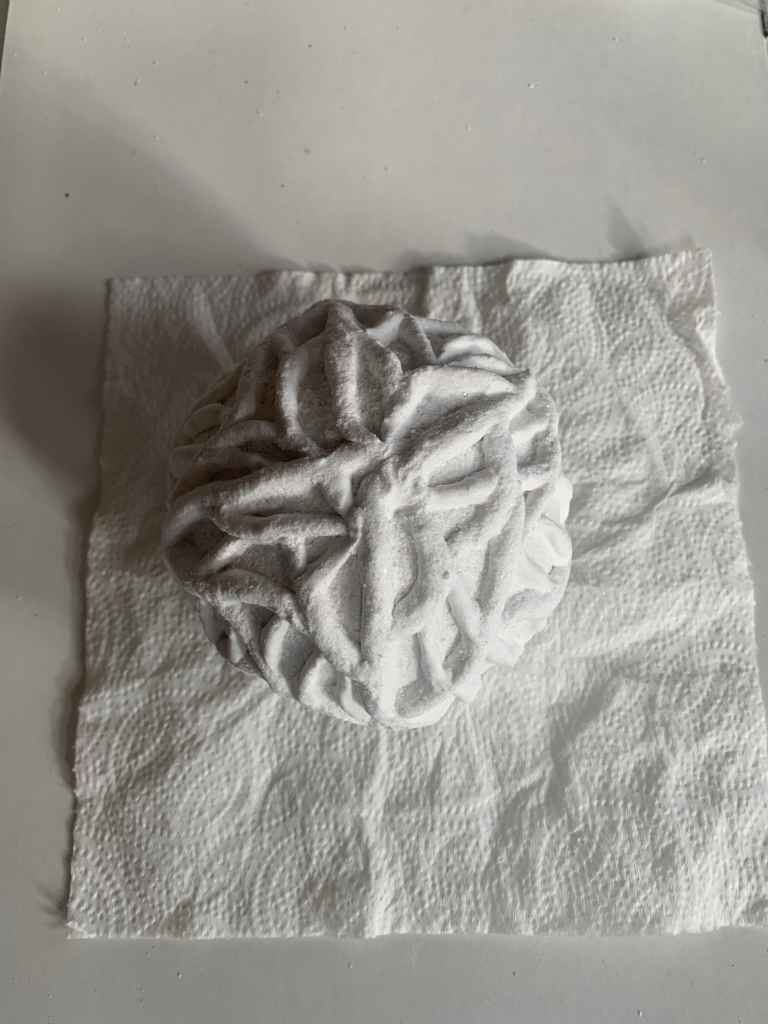
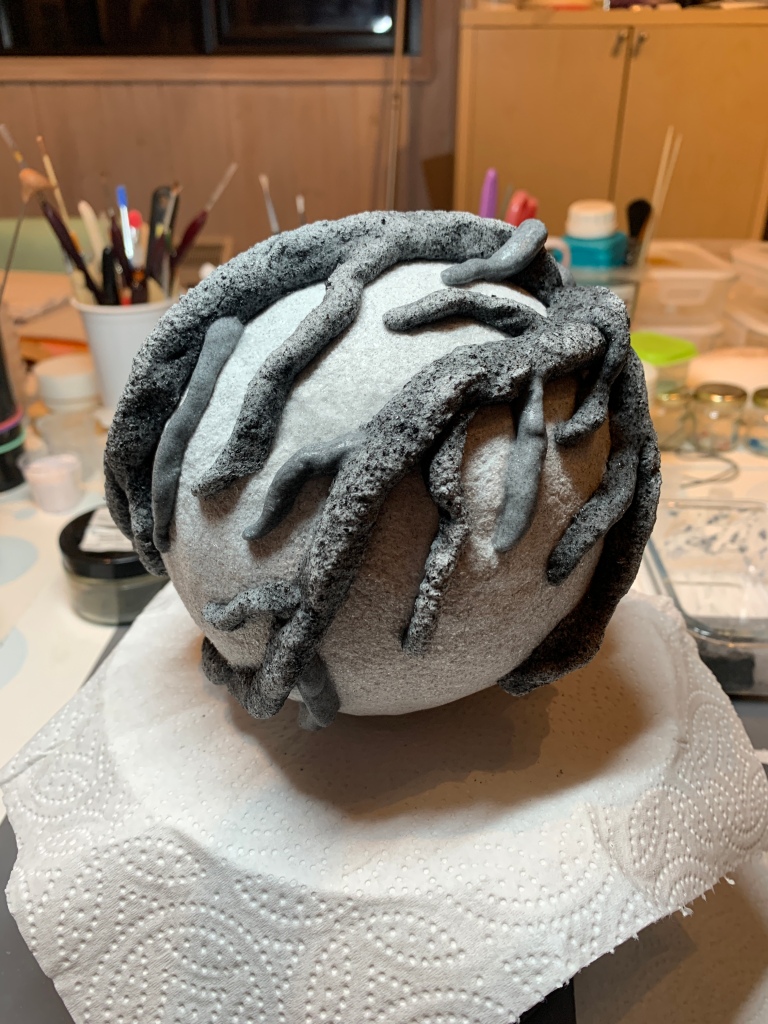
After making the ‘cell’ structured from ‘veins’ I tried a number of different approaches to applying vein-like patterns to the exterior of a cell structure. I wanted to try degrees of visual order or chaos, and to see how these effects looked in different tones – dark veins on pale background, pale veins on pale background, dark on dark etc. I also wanted to assess impact of variations in size. So i made a selection of other ‘dendritic’ cells to compare with the initial cell described in a previous post. Here are some images of the making process for these.

And here are some images of the finished cells

I also made a small sample of a potential flat panel featuring an image of a tangle of blood vessels with gilding added, representing something of a golden thread or pathway through the tangle. I went on to make three larger sample panels which became a series of three with the gilding ‘moving through’ the vein tangle and spreading across the panel.

Panels waiting to be fired for the first time before gilding

Working with different approaches to some of the same theme has felt very productive for me. I have got to assess creatively and technically which types of surface are most successful and most expressive. I also plan to gather some feedback from others as i begin to share the work to get a sense of what the different patterning and finishes convey to those who see them…

Finished angiogenesis text panels

Experimenting with angiogenesis (1)

I have already written about my interest in angiogenesis as a process that forms part of the cancer ecosystem and that potentially functions as a metaphor in the LCH context (see Concepts and Metaphors (5)). It has been fascinating to look at images of the blood vessels that grow to support tumour growth. and equally interesting to see how clearly related the visual qualities of blood vessels from a tumour are to growth patterns observable around the LCH site, such as amongst the trees and ivy growing near the demokition site and close to the Royal Marsden.

On the left, an image of tumour blood vessels. Centre and right, images of trees and ivy on the LCH site.

These types of images were my starting point for making some glass samples and experimenting with using dendritic growth patterns as both structure for glass cells and for decoration.

And so, angiogenesis has emerged as a focus for my initial creative exploration. I have long been interested in creating vein-like, dendritic structures and decoration, so this is an evolution rather than complete change of direction for my own creative practice.

I decided to start with the basic form of the sphere, partly because i enjoy working with that form, and partly because to me the sphere is suggestive of the shape of a cell (regardless of the fact that not all cells are spherical). 

My first idea was to try and construct the form as a whole just from ‘veins’ to see if i could form the cell structure that way. The following images track my progress along that path.

The first line of images above shows the initial ‘veins’ of glass paste that build the structure of the glass over the mould. The second line of images shows a later stage where more veins have been added and interwoven. I was aiming at an outcome that was somewhat evocative of the growth patterns in the images of the tumour blood vessels and also the tree and ivy growth.

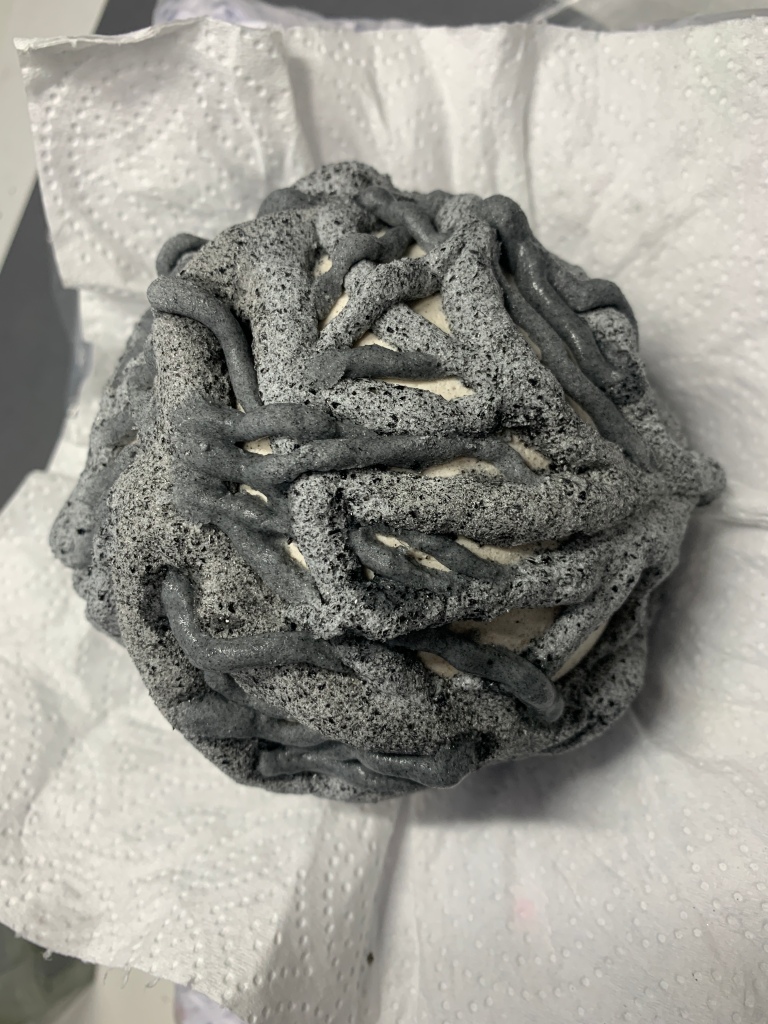
In the kiln before firing

This is how the piece looked when it went into the kiln for firing. Glass paste shrinks considerably when it’s fired, so I was expecting the veins to be more slender when they emerged. From the technical perspective I was concerned about whether the structure would be strong enough and stable when it emerged as the shrinkage can also cause the glass to pull away and disconnect or to crack and break. From a creative perspective I wanted to see how the veins looked after firing to see if they (still) evoked the tumour and growth patterns.

This is how the finished ‘cell’ looks below with a bit of directional lighting. Luckily the firing went well and the piece emerged intact. As a sample or prototype I am very happy with how it’s turned out. It was very time consuming to make – more so than the samples of dendritic cells that i made subsequently, as the lack of underlying structure for the veins made the whole thing more complex. I also felt that the shrinkage of the glass made the piece slightly less evocative than it was pre-firing, but to some extent this could be changed in subsequent pieces.

One thing I should add at this point is that this – as a sample or prototype – is not intended to be a standalone piece. My intention was that it could be a model for a component of a composition of cells, potentially some in light, some in shadow. I knew also that I wanted to experiment with working in a pale colour, probably white, and making vein structures that were also more ordered, less chatotic. So that’s what I did next.

Visual ideas and creative research

Although much of my research has been focused on ideas and concepts, I have quietly been exploring visual and sculptural ideas alongside the intellectual ones. 

So much material has been buzzing around my mind about how I might start to visually interpret and express the concepts and relationships I have been learning about. In the end i have learned that i need to ‘follow my nose’ or ‘go where the energy is’. So i have been following up the ideas that have most grabbed my attention. My frustration is that, with glass in particular, exploring a single idea can take weeks and weeks, and there are so many ideas that the visual and creative research will extend long after the residency period is over.

As I have been progressing through the concepts and ideas and conversations and learning, I know several of the things I want to explore include:

  • Things with wings
  • Angiogenesis – healthy, cancerous or not at all
  • Mosaic cells and mosaic maps
  • Light as a metaphor for oxygen availability and/or for chemical signalling
  • Barcoding and location tracking – mirroring the spatial labelling of cells
  • Stitching and golden threads (literal or not)

And this is just a starting point! I have gradually been developing a creative ‘mind map’ over the last few weeks which I will share here soon, which shows many of the directions I want to experiment with. In any case I will be posting about some of my journeys so far over the next week or two…

Metaphors and concepts (6)

This, my final post in the mini-series about the concepts and metaphors that I’ve drawn from my initial research conversations, deals with metaphors at their most metaphorical. These particular examples are not part of the standard scientific way of talking about something. Signalling or pathways, for example, are no longer really seen as particularly metaphorical but are part of the standard scientific language, even though when you stop to look they are clearly metaphorical in origin. The examples here, however, are drawn from more distant ideas to try to express something which otherwise seems out of reach. This can be especially true when trying to convey some concepts to those (like me) who don’t specialise in this area of science.

Cell graveyard

In the hypoxic conditions in the middle of a dense tumour, the majority of cancer cells will die, leaving alive only those with TP53 (or similar) mutations which allow them to continue to survive and multiply. The centre of the tumour is therefore akin to a mass grave for those cells which are not destined to become truly intransigent.

Launchpad / lift off

The point at which a cell can emerge from the tumour, going through a process called EMT that allows them to move more freely and spread around the body. This launchpad signals the beginnings of metastasis, beyond which most cancers become a very different proposition for treatment.

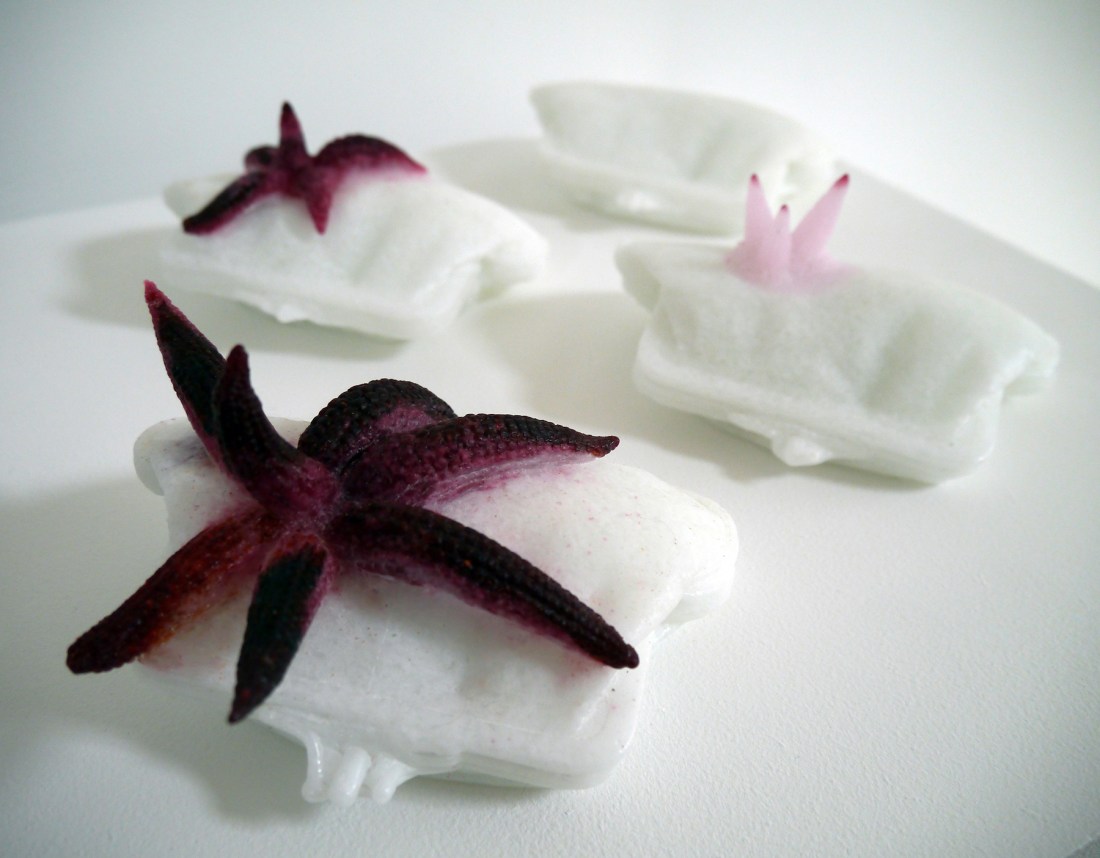
Wings

The metaphorical effect of passing through the bottleneck of hypoxia and the cell graveyard is to gain wings and achieve lift off.

Black Swan

A cancer cell that has achieved wings and lift off….

How does all this relate to the London Cancer Hub?

These ideas are incredibly evocative and loaded with emotional as well as conceptual content. As such. they were ideas that i was immediately drawn to explore. and indeed my first thought in the studio was to start creating a winged object. That may have been in part because I have recently discovered a way to make winged object using a new technique and so it’s rat the top of my mind, but also because there is something very poignant about the idea that something gaining wings and lifting off could have such a devastating impact on the prognosis of someone’s disease.

So how does that relate to the LCH? I am drawn to thinking of both a black swan and a white swan. With cancer, the appearance of a black swan is the point at which the disease very likely becomes unstoppable for a particular individual. I like to think, romantically perhaps, that an equivalent white swan can emerge that will make the combined strength of all the players at the London Cancer Hub unstoppable in the future in their effort to prevent and treat cancer. Despite the prevalence of cancer, one of the many things I have learned over the last few months is the level of the selective and adaptive forces required to create the ‘wings’ in a cancer that make it indestructible. I imagine the effort, resources and energy required to create a white swan will be similarly significant.

Off to school

I was very excited to be able to visit the Harris Academy Sutton (HASU) as part of my residency research. As well as having a really illuminating conversation with some of the incredible teaching staff, it was lovely also to meet and chat with several Year 12 students about their ideas and also to have a look around the amazing purpose-built site, which nestles into the edge of the London Cancer Hub ‘campus’,

Early on in the residency I was quite puzzled by how a school could be integrated into the London Cancer Hub, which seems such a specialist endeavour, so this was one area of discussion I was interested to focus on initially. And whilst the school obviously has a remit in relation to providing a broad education for it’s pupils, i was surprised at the number of different ways that the school either is already, or can become, strongly allied to the London Cancer Hub organisations.

HASU has a specialist science focus, so as such is already tuned in to the subject matter and potential for the relationship with the organisations of the London Cancer Hub. Here is a (not exhaustive) list of some of the ways that HASU is connected with the LCH that emerged from my discussion with the staff:

  • The relationship with the LCH is a real incentive and attraction to teachers – more than one of the staff I spoke to was really influenced to join HASU because of the LCH.
  • HASU is the recipient of equipment from the ICR that is no longer useful to them, but very handy for the school
  • There is an aspiration for every year 10 student to have a mentor scientist – ‘their’ scientist.
  • There are lots of ideas part way in progress to provide students with mentors from the ICR and RMH (as well as from other industries)
  • The curriculum is relevant in some areas. Teachers also particularly talk about how those parts of the curriculum might relate to the work of the LCH – eg when teaching mitosis in biology
  • In time they hope to integrate the LCH organisations into careers events,

I was less expecting some other connections. Some pupils have parents working at the LCH. Not at all surprising when you think about it, but I hadnt previously thought about it. Similarly unexpected for me was the question of whether some of the pupils had relatives being treated at the RMH.

In terms of how conscious the students are about the LCH and its role:

  • The LCH attracts students to the school as well as teachers, One student who joined in Year 12 said that the science focus and LCH together were a real consideration when she was looking for a school to transfer to.
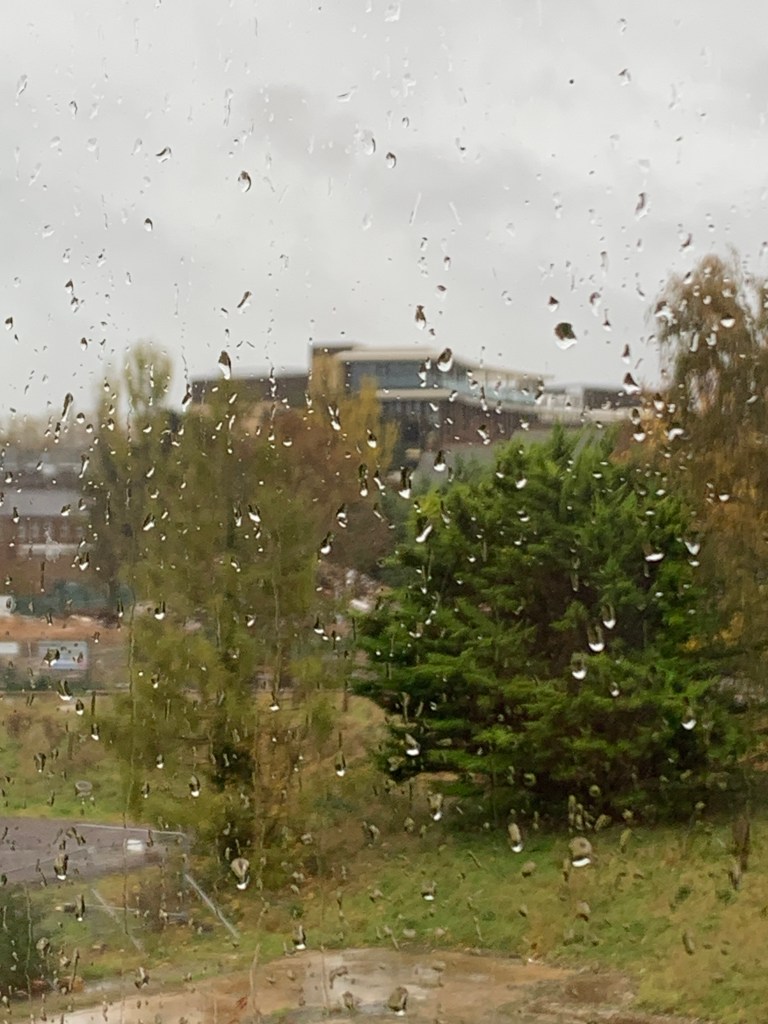
  • There isn’t much opportunity or reason to visit the LCH site (they aren’t allowed in to some areas anyway) it is visually part of their landscape, especially now that the old hospital buildings that blocked the view have been demolished,
The view from HASU to the Oak Cancer Centre

From there we got onto a more general conversation about art and science. Several of the students I met were taking art A Level and had thought about the relationship between art and science, to come extent thematically and also from a process point of view. One of their elective courses covers the relationship between art and science in some detail – I am hoping to go back in January as part of that course to talk with the students in some more detail about how art and science can relate in practice….

Metaphors and concepts (4)

Today I am going to dip in to some concepts that aren’t quite as closely related to ecological mechanisms from the cancer ecosystem. They have come up from a variety of conversations with people from a range of settings – from research science to business development discussions for example. Instead of separating these into the cancer ecology concepts and their relationship with the London Cancer Hub as I have done previous posts in this series, for this post where the concepts are less ecological, i am mixing things up a bit.

Barcoding

When talking about some of the data that informs the understanding of cancer evolution, it was explained to be how different cells get ‘barcoded’ so that their behaviour and characteristics can be examined, dependent, for example, on where they are located within a tumour. This enables the team to analyse behaviours or outcomes according to the cell location.

The idea of barcoding made me think a lot about how people are positioned and move around the LCH site and the nature of their experience, depending on where on the site they are based. Most of the people I spoke to spend most of their time in a single location for their work, or certainly mainly within one organisation’s buildings. When I asked about using other parts of the site, most of the people I spoke to kept mainly to their own area. However, a few travelled across the site – between the ICR and RMH for example – on a regular basis, and others talked a lot about travel to and fro from other partner organisations such as Imperial, possibly more than within the LCH. I thave oyed with the idea of making an artwork based on tracking people’s movements around the site. I think it would be illuminating – tho i am not sure how keen people would be to take part!

Securing

We had a conversation about patient medical data, its sharing, safekeeping and its absolute crucial role in research. The day of this conversation, an article had been published in the Guardian about how UK medical data was – or was not – being protected, and how much research is impossible without access to large data sets that rely on individuals being secure about how their information is shared. (Articles of this nature are being published every week, reflecting major ongoing developments in this sphere).

Security is an obvious concern in relation to different parts of the LCH and movement around the site is not unrestricted, no doubt for some very good reasons. The ICR, for example, is all access controlled, so that only staff or approved visitors can access the buildings. The Royal Marsden obviously needs to be accessible to patients so there are many spaces that can be accessed without restriction. However, I visited several to office spaces where you needed a pass to get in.

All this set me thinking, are there parallels that I can investigate between the security of medical data and the security of the site? Something to think about, though I have no idea yet where that might lead….

Bridging“, “Stitching” and “Translating

These ideas came up in particular when talking about the Innovation Gateway and the development of the new multi-use site that could also house larger biotech or pharma-type companies, and the relationships between the research activities and treatment facilities focused in the ICR and Royal Marsden with the commercial ompanies housed at the Innovation Gateway or on the new site. (Confusingly to me, the new development site seems often to be referred to specifically as the London Cancer Hub on its own, without meaning the whole inclusive site covering the ICR, Royal Marsden etc.)

To me the ideas of bridging and translation apply principally to the LCH rather than the cancer ecosystem, and indicate the perceived or actual gap between the focus and/or the operations of the different types of organisations. ‘Translating’ we spoke about literally in relation to facilitating discussions and agreements across disciplines, in particular, for example, between business areas and clinical or research teams. But the idea works not only in relation to the specifics of language, but potentially also translating between priorities and focus as well. ‘Bridging’ fits nicely with all the spatial ideas that have emerged already in the discussions of the cancer ecosystem but works more or less literally on the site too.

Of these three, I think ‘stitching’, for me, has the most creative possibilities – it is literally an interesting way to make artwork. It also seems to me to be an expressive of what might need to happen to create a single site of excellence where the organisations can build effectively on each other’s work rather than operating as separate but physically adjacent entities. 

Plenty of food for thought with all this!

Metaphors and concepts (2)

Today’s ideas are all about routes, travelling, and journeying. Some seem to be so commonplace that they are not really thought about as metaphors at all. And I’m also beginning to pick out metaphors that are more clearly ‘metaphorical’ and used deliberately because of their non-scientific connotations.

Concepts in a cancer context

Many of my descriptions about how these relate to cancer are drawn from a fascinating conversation with the Biology of Childhood Leukaemia team in a discussion about the role of gene TP53 in regulating cancer and the effects of hypoxia (lack of oxygen) on cancer evolution.

“Pathways”

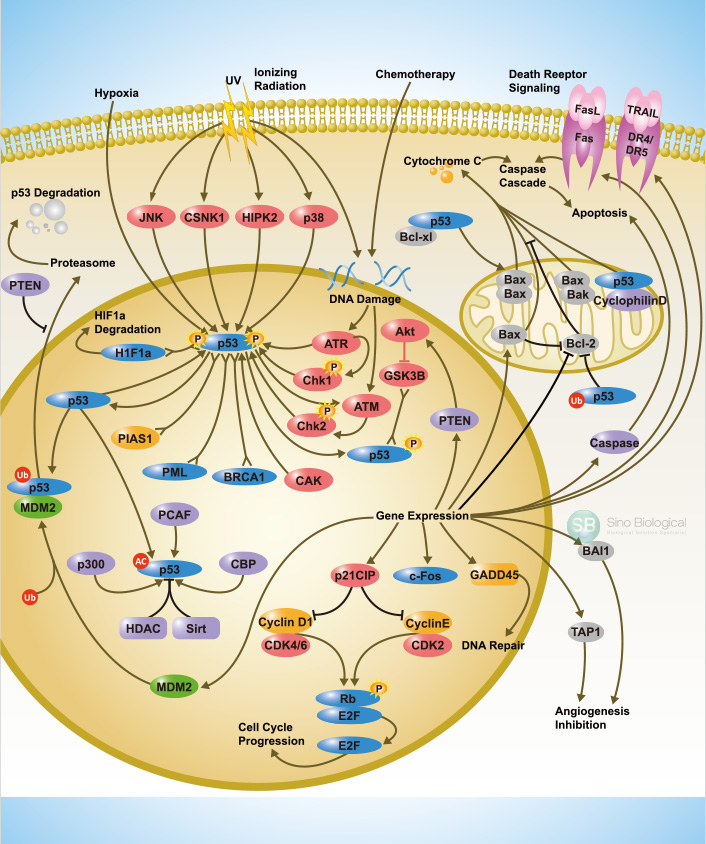
Steps in the process that govern a cellular system. For example, the TP53 pathway is the one that a cell goes through in terms of whether it is ‘allowed’ to replicate, is sent to be fixed or if it is earmarked to die.

An example of how a pathway is illustrated – this one centred on the P53 protein generated by the TP53 gene

“Gateway”

On a pathway there can be a gateway, such as the gateway that cells go through on the TP53 pathway, for example, in order to know if they should go forward to replicate or stop and die. This is a gateway that can become very ineffective in cancer – cancer cells do not die in the same way as normal cells – and may be related to changes or mutations of the TP53 gene.

“Bottleneck”

A point at which many cells fail and a few pass through such as in the toxic environment at the centre of a tumour where the majority of cells die but one or two may replicate with mutations that allow them to survive.

“Signalling”

How cancer cells communicate with surrounding cells.  Eg, they can signal to the body to grow more blood vessels to a tumour. Signals can be proximal (ie next door with surface proteins) or longer range chemical (eg with hormones etc).

“Rite of Passage”

This is a more specific metaphor drawn from one of the papers of the Childhood Leukemias Team. This metaphor represents the point of no return in cancer. Specifically, the ‘rite of passage’ in the paper refers to the the point at which the TP53 mutation allows cells to transition through EMT and launch themselves into the rest of the body. THis is the point where cancer metastasises, after which the hopes of ‘cure’ are drastically diminished. A rite of passage indeed.

How all this relates to the London Cancer Hub

While talking to ICR researchers the idea of spatial movement came up frequently, both in terms of their research and about their personal movements around the site and around London. While it seemed to me that in terms of the site, they concentrated on the ICR part of the campus, several mentioned how walking past or through hospital buildings either as part of their journey to work, or to collect samples or meet with clinicians, reminded them of the ultimate purposes of their work. This was especially true when they cam into direct contact with patients, even if this was just seeing or passing them on their own pathways,

Movement around the LCH was not the only example of establishing pathways in a very literal sense. Several researchers also told me about their regularly trodden routes around London as part of their work. For example, one scientist talked about how at one stage in her work she was travelling frequently – occasionally daily – on a circuit between the Sutton ICR, the Chelsea ICR and the Imperial College campus at White City. Interestingly, her work was heavily focused on identifying the spatial arrangements of different cell types in tumours, which are ‘barcoded’ to keep track of their position. We chatted about the possibilities of tracking the movements of researchers in a similar way. I would love to track some staff across the site and see what visual mappings came out of the exercise. I’ll be posting more about the site, its history and pathways through it in a forthcoming post…

And the ‘rite of passage’ for the LCH? I could interpret that in so many ways, so I am going to hold back and see what else emerges,

Welcome!

Featured

Thanks for coming to visit Glass Bodies, my blog for reflecting on and recording some of my collaborative projects about medicine and the body and how I translate my learning about these into my artworks, usually in glass (hence the name of the blog….)

If you are new to the blog, you’ll see that my most recent post comes first. This is handy for people who are coming back to read my latest updates, but if you have just arrived to read about Evolving the Ecosystem, my research and development residency at the London Cancer Hub as part of Sutton STEAMs Ahead, it will make most sense if you scroll back to September 2023 to my first post about the project and read forward from there. This residency is funded by London Borough of Sutton as part of the Mayor of London’s Cultural Impact Award and The National Lottery Heritage Fund.

Enjoy!

The role of metaphors

I think I may have already shared that something that particularly interests me for this project – and in my wider work – is the metaphors we use to explain things. Some of these metaphors are so deeply engrained in our language that we no longer even notice they are metaphors. However, when you are an outsider trying to understand something new, the metaphors somehow stand out much more clearly. That’s one of the things I particularly enjoy about working with scientific themes as a non-scientist – the metaphors tend to stand out loud and clear.

One of the principle ways that I am approaching this work is to identify some of the key metaphors that explain cancer as part of a living ecology and the processes that form part of that ecology. That’s why it has been such a joy to be able to talk to the researchers who are doing this work, and not just read scientific paperwork. Although research papers do also contain many useful metaphorical ways of describing their content, I tend to find the richest language when in conversation face to face where we can explore the ideas that emerge in more detail and I can follow particular paths to see where they lead. The wonderful Professor Sir Mel Greaves, who I have been lucky enough to speak to as part of this project, observed that he finds he uses metaphor extensively when talking to a lay audience as he finds this is a most effective way to convey his ideas with real impact.

My hypothesis is that using these metaphors in my artwork will also communicate some complex or unfamiliar ideas more intuitively. That’s where I’m headed with this work and many of the following posts will be based around the metaphors that I’m interested in understanding and pursuing.