Some residency reflections

As the residency closes, I have been reflecting on what I have learned and what comes next. My previous post about the closing event outlines much of my thinking at this point on many specific issues, so I am just adding a few more ideas and observations here before I conclude this chapter of Evolving the Ecosystem.

The LCH as a idea

One of the things that surprised me at the start of the residency was how much the London Cancer Hub is still an idea rather than a fully formed entity. Now that I have come through the residency I understand how true this is, and that the idea of what the LCH is – or could be – currently exists differently according to people’s roles and experiences. For some, it’s still quite a meaningless set of words; their experiences are only of a specific organisation on the Sutton site. For others, the LCH principally refers to the part of the jigsaw that is not yet built – the multi-use development site. For yet others, it’s an aspiration, and for others still, it is a nascent alliance of organisations set to get stronger. Of course it can be all of those things. The one thing it isn’t is a fully developed reality.

The LCH as a conceptual space

In discussing the LCH as an idea and as a location with colleagues from the Sutton STEAMs Ahead programme, we talked about the LCH not just an idea, as above, but as a space not yet fully realised, a specific place that exists only currently as a conceptual space. A lot of the work I still want to do relates to the maps and the site, and this is a very helpful construct for taking that forward, and also for understanding the potential that the LCH has to develop from concept to reality. 

The LCH as an ecosystem

I wrote quite extensively in my last post about ecosystems and the question of whether the LCH can be considered as one. Encyclopaedia Britannica defines an ecosystem as:

Ecosystem, the complex of living organisms, their physical environment, and all their interrelationships in a particular unit of space.

To my mind there is no doubt that the LCH fulfils that definition, and that some of the metaphors from the cancer ecosystem can be applied in different ways to help us understand what’s going on there. I also think therefore that the idea of developing the eocsystem as healthy and productive and as supporting the goals of the community is a valid perspective to take, and gives us clues about some of the things that could be nurtured in order to help the LCH fulfil its potential.

To that end, I have summarised some observations about the LCH ecosystem using ideas from the discussions of cancer research. This is not an exhaustive list, and I am sure anyway that more will bubble up for me as I allow the learning of the last months to percolate. It is also not in itself ‘scientific’ though it is well grounded in conversations and observation that I have made during my residency. And finally, this is all said in the spirit of building the best possible version of the London Cancer Hub and is not intended to be critical or negative in any respect – indeed I have great admiration for all those involved in this incredible endeavour.

In that spirit, here are some of the things that have struck me most forcefully over the last few months:

Pathways: There are some well-trodden physical pathways around the LCH site and some well-trodden organisational pathways too. However, if the experience is going to be frictionless for visitors to the site, or for people to collaborate, then new pathways need to develop and existing pathways connecting people and place will need to be better signposted.

Signals: The current literal signals and signposts are patchy and mismatched across the LCH site and people get lost trying to find their way, both literally and figuratively; the signals that indicate the possibilities for more interaction across the LCH are also weak, patchy or absent in places.

Morisita: More than one individual working at the LCH mentioned to me that part of the attraction was the interdisciplinary possibilities for their work, and even pupils at the school mentioned that they were attracted by the possibilities for intermingling that the LCH offers. The Morisita index measures the degree of segregation or mixing within a population. It might be useful to understand what the ‘right’ level is on the index for the LCH or for its constituent parts and to keep tabs on how that is manifesting.

Hypoxia: Where parts of a living system are starved of oxygen, arguably, they either die or become resistant or intransigent. It is interesting what the equivalent effects might be in terms of a working culture, especially if that culture has to exist across different countries, organisations, hierarchies or departments. I have previously been involved in exploration of the cultures of research science and understand that there are risks that the culture can become toxic if no one pays attention to maintaining its health.

Angiogenesis: Perhaps a potential antidote to segregation, isolation or resource deprivation is the growth of metaphorical interconnection such as is suggested through the idea of angiogenesis. While there is no useful literal interpretation, I believe that this idea offers something slightly different from the idea of pathways or signals. Angiogenesis, when it functions in a healthy way, is all about creating connections to deliver oxygen, energy and nutrients to the entire body. Where they fail to grow, the body dies. Where they ‘overgrow’ as they do around tumours, they are an indication ill health. The LCH is currently a group of separate parts, with no full circulation that delivers to all. If the LCH is to function as a coordinated effort, some connections may yet need to develop, for example in the form of managed and/oir spontaneous communication, the sharing of ideas and energy, not only along established channels but through new ones too. And if too many channels lead to a single site, maybe that will be a way to understand that it is because not all there is well.

Do revisit some of my ‘Concepts and Metaphors‘ posts (1) (6) if you are interested in seeing more of how I have understood the metaphors to relate across the two ecosystems.

Visualising Cancer

Having had a chance to talk to people about their experiences of cancer and how they visualise their disease as part of this project, I am increasingly aware that each person’s imagery is as individual as their cancer. Having said that, I am curious too to continue to investigate where our imaginings overlap and I hope to have the opportunities to explore how the ways we think and talk about cancer influence what we feel and see in our minds’ eye. And I also have multiple ideas for artwork stemming specifically from this strand of research that I can’t wait to develop.

Where next?

This residency has undoubtedly given me both intellectual and visual inspiration that will last me for a long time, but you have to start somewhere. I have identified two projects that I want to make a start on soon after finishing this residency. The first is to use the ideas from my prototypes to create a site specific sculptural installation. I will start looking for a site immediately as I want to be able to use a specific location as a canvas for creating the piece. Secondly I intend to start to develop and perfect some pieces responding to the broken egg and other ‘visualising cancer’ themes. I am looking at including textual elements as well as visible mending and am as enthusiastic to get started with this as with the previous idea.

I’m going to be busy!

Visualising cancer (2)

Previously I wrote about my interest in how we visualise disease within our bodies and that one of my priorities as part of this project was to talk to people for my research who were, or had been, being treated at the Royal Marsden.

I was lucky enough to get the chance to talk to a small number of patients currently undergoing treatment or under observation. I am not recounting any medical detail that we discussed here; obviously I want to maintain the privacy of those who spoke with me. Rather I am reflecting on some of the more abstracted discussions about imagining disease that served as inspiration and provided visual ideas to investigate or develop further. And alongside these reflections are some brief observations about how the London Cancer Hub is experienced for some of those being treated there.

Visualising science

A couple of the patients I spoke to were particularly focused on understanding the science of their experience, although from different perspectives. One had been involved in research professionally, and continued their professional interest. Another was moved to research and understand as much as possible about the scientific mechanisms and processes governing their current experience. Both found the scientific information that they engaged with had an impact on how they imagined their disease. One had a detailed understanding of anatomy and felt that imagination and knowledge were generally in accord, whereas others had an imaginary world that might be influenced by their knowledge, but was not entirely at one with it. 

Visualising cells

In at least one interview, we spoke at some length about visualising cells and about imagining how ‘cells go rogue’. As well as discussing the scientific mechanisms as far as we understood them, more of the conversation was dedicated to how cells might appear in our minds’ eye. One participant described their sense of a small, dark, translucent, hollow globe that represented the cancer cell in their mind’s eye, a cell that was somehow coated in invisibility to the immune system. This contrasted with their vision of healthy cells as a beautiful pink, full of delicate and intricate structures.

Visualising tumours

I asked several of my interviewees whether they had visualised their tumour, or indeed seen images or scans of their tumour and mainly they had not. We discussed how they imagined their tumour within their body. We also discussed the presence or absence of a tumour that you could feel from the outside of your body and the impact that had on your imagination, for example, thinking about the convex and the concave. One person described initially thinking of their tumour as smooth like an egg, but then reassessing after being told that what identified it initially as potentially malignant was that the lump had broken up when excised. 

Because of this, eggs and broken eggs became really interesting metaphors for me that i would like to explore going forward. Eggs are both a site of growth – usually with a positive connotation although not always – and are also often used as an example of extreme fragility. These make powerful ideas to experiment with. I am planning on making a series of eggs and also playing with the japanese idea of kintsugi – the practice of highlighting imperfection through visible mending – alongside such pieces. 

Visualising connections

I spoke to all my interviewees about the London Cancer Hub in terms of any expected or unexpected connections they had experienced through being part of a larger entity than the Royal Marsden itself. Several people mentioned the relationships within the RMH between Chelsea and Sutton. Others discussed referrals from other medical institutions and the relationships between their local hospital and the RMH.

With more than one patient I discussed their experience of using the Maggie’s Centre on the LCH site. They were extremely appreciative of the support they received from Maggie’s, and in particular the patient groups that Maggie’s facilitates which connected them with people who were going through or had gone through similar experiences. 

With one patient in particular we went on to explore the idea of all the connections in a more abstract way. We spoke of bubbles, ripples, radial relationships and concentric circles. They spoke of Boolean searches and intersecting search terms and I replied with Venn diagrams. One of the striking features of the London Cancer Hub is not only the relationships within it but also so many relationships that connect it to other institutions, organisations, groups, both formal and informal. This conversation brought home to me the extent of the network that the LCH sits within.

Visualising ecosystems

We mostly didn’t get on to talking about the comparative ecosystems of cancer and the London Cancer Hub, but there was one exception which I want to record here because I particularly want to come back to it in thinking about sculptural compositions in relation to where this work takes me in the future. This was a conversation where my interviewee observed that one comparison between the two was that cancer was a system characterised by proliferation and spread, whereas the LCH would be characterised instead by unification and concentration. Somehow this had completely escaped me up to that point. It was, and remains, a very useful and potentially productive observation for me to carry into my artwork.

The LCH visiting experience

When I spoke to patients about their experience of being at the LCH as a visitor there was pretty much consensus that their experience was not of the LCH at all, but of the Royal Marsden. Mostly the RMH was the only place they went to on site, but even those who visited Maggie’s were not conscious of any broader idea of collectivity than that Maggie’s was co-sited with the hospital, as Maggie’s Centres generally are.

I asked all the patients i spoke to whether they were aware of other organisations on site. In most cases we immediately got onto conversations about getting lost. More than one patient had become aware of the ICR by entering the site through the ‘wrong’ entrance and getting lost. More than one patient had also got lost trying to navigate the site to find Maggie’s from the RMH. Another had seen the signs for the London Cancer Hub and was confused as to what that was.

It is clearly early days for the LCH and its also true that patients do not necessarily need to know that the hospital they are visiting is part of a larger entity, but it is something for the LCH folk to think about going forward. More than one patient mentioned the benefit of being part of a hospital involved in clinical trials and at the forefront of treatment and the RMH’s alliance with the ICR and other organisations at the LCH might be reassuring or helpful in some other way. 

And more than that, the site is confusing, signage is not sufficient or consistent and people get lost. It was oddly comforting to know that it was not just me. But it points to back to the lack of coherent planning across the site that is currently a feature of the LCH.

Visualising cancer (1)

Over the years I have become particularly interested in how we visualise cancer in our own bodies. When i found a lump in my neck in my late twenties, I had a visual image of what was going on that probably had nothing to do with the science of the thyroid and everything to do with how i was feeling and how my mind’s eye works. Initially I received the diagnosis that the lump on my thyroid was benign – at which point I stopped thinking about it so much. A revision of the pathology results and a reclassification of the diagnosis to a malignancy focused my attention very much back on what was happening in my body. I can still recall much of how I visualised the progression from feeling the lump in the first place though the initial diagnosis and then during further treatment.

Since i started to pursue art as a career I have followed this interest in how we imagine what’s taking place in our bodies when we are well and when we are not. I absolutely don’t expect that everyone’s visualisation style will match mine and I also don’t imagine that other people’s visualisation of what’s happening inside them will necessarily match to the science of their condition any more than mine did – though it might. For me there was much too much emotion influencing what I ‘saw’. Nonetheless – or more probably because of that – I am intrigued about the imagery that populates our minds when something changes in our bodies or we’re told that something has gone wrong.

Last year I was lucky enough to work on a project that allowed me to partner with an individual to explore with them their experiences of cancer and chemotherapy and how it played out in their own mind’s eye. The result was several pieces of artwork that reflected their sense of how cancer and chemotherapy worked its way through their body. For this project I wanted to continue to involve people dealing with cancer themselves, finding a way to connect with people who are interested in the project; patients are, after all, the reason that the London Cancer Hub exists at all. Thanks to the support of the Patient and Public Involvement and Engagement Team at the Royal Marsden, and their platform, the Cancer Patient’s Voice (see previous posts) I was able to get in contact with some patients who had expressed an interest in taking part.

In the mind’s eye…

As a result I was lucky enough to speak with several patients who were undergoing active treatment or who were under ongoing observation. I had fascinating and wide-ranging conversations with all of them about their treatment, their experiences of the LCH and about how they visualised their disease, both in terms of their personal experiences and in relation to the science they had learned as part of their treatment. Rather than going into detail about each of the conversations, in my next post on this theme I am going to consolidate some of the outcomes of our conversations.

Each of the people who talked with me were generous enough to give me permission – despite the very personal nature of their stories – to use their observations and experiences as inspiration for artwork and potentially within the artwork itself.  I am enormously grateful to all of them for their generosity and help.

Metaphors and concepts (6)

This, my final post in the mini-series about the concepts and metaphors that I’ve drawn from my initial research conversations, deals with metaphors at their most metaphorical. These particular examples are not part of the standard scientific way of talking about something. Signalling or pathways, for example, are no longer really seen as particularly metaphorical but are part of the standard scientific language, even though when you stop to look they are clearly metaphorical in origin. The examples here, however, are drawn from more distant ideas to try to express something which otherwise seems out of reach. This can be especially true when trying to convey some concepts to those (like me) who don’t specialise in this area of science.

Cell graveyard

In the hypoxic conditions in the middle of a dense tumour, the majority of cancer cells will die, leaving alive only those with TP53 (or similar) mutations which allow them to continue to survive and multiply. The centre of the tumour is therefore akin to a mass grave for those cells which are not destined to become truly intransigent.

Launchpad / lift off

The point at which a cell can emerge from the tumour, going through a process called EMT that allows them to move more freely and spread around the body. This launchpad signals the beginnings of metastasis, beyond which most cancers become a very different proposition for treatment.

Wings

The metaphorical effect of passing through the bottleneck of hypoxia and the cell graveyard is to gain wings and achieve lift off.

Black Swan

A cancer cell that has achieved wings and lift off….

How does all this relate to the London Cancer Hub?

These ideas are incredibly evocative and loaded with emotional as well as conceptual content. As such. they were ideas that i was immediately drawn to explore. and indeed my first thought in the studio was to start creating a winged object. That may have been in part because I have recently discovered a way to make winged object using a new technique and so it’s rat the top of my mind, but also because there is something very poignant about the idea that something gaining wings and lifting off could have such a devastating impact on the prognosis of someone’s disease.

So how does that relate to the LCH? I am drawn to thinking of both a black swan and a white swan. With cancer, the appearance of a black swan is the point at which the disease very likely becomes unstoppable for a particular individual. I like to think, romantically perhaps, that an equivalent white swan can emerge that will make the combined strength of all the players at the London Cancer Hub unstoppable in the future in their effort to prevent and treat cancer. Despite the prevalence of cancer, one of the many things I have learned over the last few months is the level of the selective and adaptive forces required to create the ‘wings’ in a cancer that make it indestructible. I imagine the effort, resources and energy required to create a white swan will be similarly significant.

Off to school

I was very excited to be able to visit the Harris Academy Sutton (HASU) as part of my residency research. As well as having a really illuminating conversation with some of the incredible teaching staff, it was lovely also to meet and chat with several Year 12 students about their ideas and also to have a look around the amazing purpose-built site, which nestles into the edge of the London Cancer Hub ‘campus’,

Early on in the residency I was quite puzzled by how a school could be integrated into the London Cancer Hub, which seems such a specialist endeavour, so this was one area of discussion I was interested to focus on initially. And whilst the school obviously has a remit in relation to providing a broad education for it’s pupils, i was surprised at the number of different ways that the school either is already, or can become, strongly allied to the London Cancer Hub organisations.

HASU has a specialist science focus, so as such is already tuned in to the subject matter and potential for the relationship with the organisations of the London Cancer Hub. Here is a (not exhaustive) list of some of the ways that HASU is connected with the LCH that emerged from my discussion with the staff:

  • The relationship with the LCH is a real incentive and attraction to teachers – more than one of the staff I spoke to was really influenced to join HASU because of the LCH.
  • HASU is the recipient of equipment from the ICR that is no longer useful to them, but very handy for the school
  • There is an aspiration for every year 10 student to have a mentor scientist – ‘their’ scientist.
  • There are lots of ideas part way in progress to provide students with mentors from the ICR and RMH (as well as from other industries)
  • The curriculum is relevant in some areas. Teachers also particularly talk about how those parts of the curriculum might relate to the work of the LCH – eg when teaching mitosis in biology
  • In time they hope to integrate the LCH organisations into careers events,

I was less expecting some other connections. Some pupils have parents working at the LCH. Not at all surprising when you think about it, but I hadnt previously thought about it. Similarly unexpected for me was the question of whether some of the pupils had relatives being treated at the RMH.

In terms of how conscious the students are about the LCH and its role:

  • The LCH attracts students to the school as well as teachers, One student who joined in Year 12 said that the science focus and LCH together were a real consideration when she was looking for a school to transfer to.
  • There isn’t much opportunity or reason to visit the LCH site (they aren’t allowed in to some areas anyway) it is visually part of their landscape, especially now that the old hospital buildings that blocked the view have been demolished,
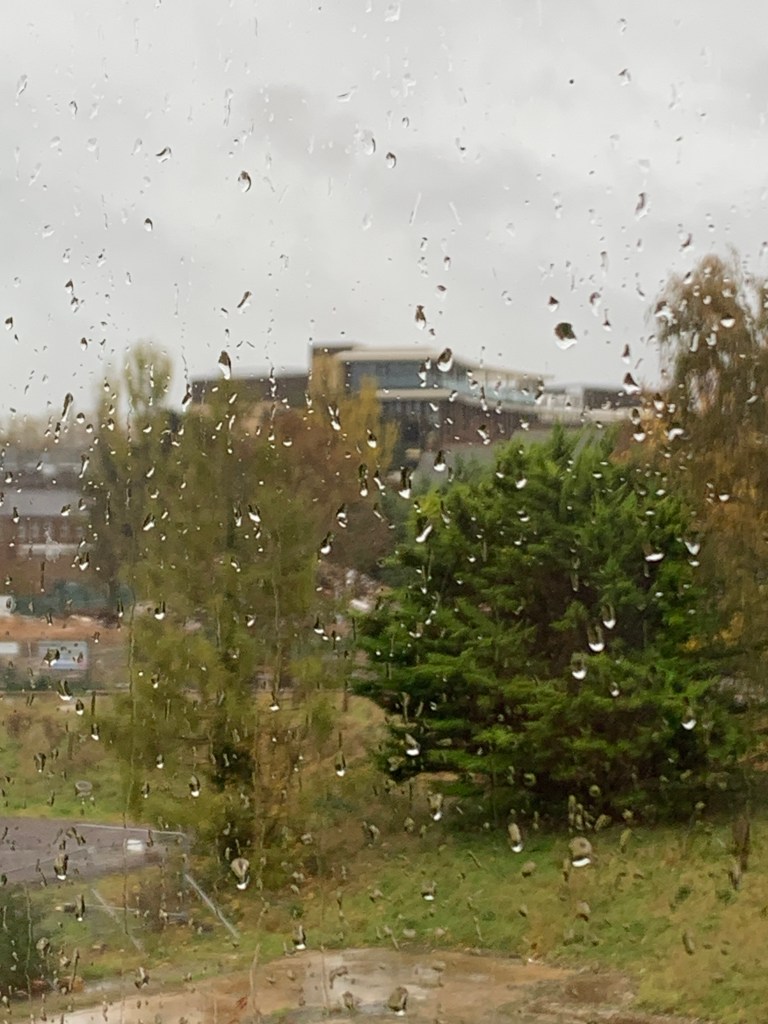
The view from HASU to the Oak Cancer Centre

From there we got onto a more general conversation about art and science. Several of the students I met were taking art A Level and had thought about the relationship between art and science, to come extent thematically and also from a process point of view. One of their elective courses covers the relationship between art and science in some detail – I am hoping to go back in January as part of that course to talk with the students in some more detail about how art and science can relate in practice….

Metaphors and concepts (4)

Today I am going to dip in to some concepts that aren’t quite as closely related to ecological mechanisms from the cancer ecosystem. They have come up from a variety of conversations with people from a range of settings – from research science to business development discussions for example. Instead of separating these into the cancer ecology concepts and their relationship with the London Cancer Hub as I have done previous posts in this series, for this post where the concepts are less ecological, i am mixing things up a bit.

Barcoding

When talking about some of the data that informs the understanding of cancer evolution, it was explained to be how different cells get ‘barcoded’ so that their behaviour and characteristics can be examined, dependent, for example, on where they are located within a tumour. This enables the team to analyse behaviours or outcomes according to the cell location.

The idea of barcoding made me think a lot about how people are positioned and move around the LCH site and the nature of their experience, depending on where on the site they are based. Most of the people I spoke to spend most of their time in a single location for their work, or certainly mainly within one organisation’s buildings. When I asked about using other parts of the site, most of the people I spoke to kept mainly to their own area. However, a few travelled across the site – between the ICR and RMH for example – on a regular basis, and others talked a lot about travel to and fro from other partner organisations such as Imperial, possibly more than within the LCH. I thave oyed with the idea of making an artwork based on tracking people’s movements around the site. I think it would be illuminating – tho i am not sure how keen people would be to take part!

Securing

We had a conversation about patient medical data, its sharing, safekeeping and its absolute crucial role in research. The day of this conversation, an article had been published in the Guardian about how UK medical data was – or was not – being protected, and how much research is impossible without access to large data sets that rely on individuals being secure about how their information is shared. (Articles of this nature are being published every week, reflecting major ongoing developments in this sphere).

Security is an obvious concern in relation to different parts of the LCH and movement around the site is not unrestricted, no doubt for some very good reasons. The ICR, for example, is all access controlled, so that only staff or approved visitors can access the buildings. The Royal Marsden obviously needs to be accessible to patients so there are many spaces that can be accessed without restriction. However, I visited several to office spaces where you needed a pass to get in.

All this set me thinking, are there parallels that I can investigate between the security of medical data and the security of the site? Something to think about, though I have no idea yet where that might lead….

Bridging“, “Stitching” and “Translating

These ideas came up in particular when talking about the Innovation Gateway and the development of the new multi-use site that could also house larger biotech or pharma-type companies, and the relationships between the research activities and treatment facilities focused in the ICR and Royal Marsden with the commercial ompanies housed at the Innovation Gateway or on the new site. (Confusingly to me, the new development site seems often to be referred to specifically as the London Cancer Hub on its own, without meaning the whole inclusive site covering the ICR, Royal Marsden etc.)

To me the ideas of bridging and translation apply principally to the LCH rather than the cancer ecosystem, and indicate the perceived or actual gap between the focus and/or the operations of the different types of organisations. ‘Translating’ we spoke about literally in relation to facilitating discussions and agreements across disciplines, in particular, for example, between business areas and clinical or research teams. But the idea works not only in relation to the specifics of language, but potentially also translating between priorities and focus as well. ‘Bridging’ fits nicely with all the spatial ideas that have emerged already in the discussions of the cancer ecosystem but works more or less literally on the site too.

Of these three, I think ‘stitching’, for me, has the most creative possibilities – it is literally an interesting way to make artwork. It also seems to me to be an expressive of what might need to happen to create a single site of excellence where the organisations can build effectively on each other’s work rather than operating as separate but physically adjacent entities. 

Plenty of food for thought with all this!

Metaphors and concepts (3)

Today’s concepts and metaphors are mainly related to cancer’s evolutionary abilities. These ideas relate directly or indirectly to the ways in which cancer can mutate, grow and evade treatment and the ways that these are talked of. This particular selection of ideas is currently not at the heart of my artwork development, but I feel it is important to note them nonetheless.

Wild Type

The wild type (WT) is the phenotype that is the typical form of a species as it occurs in nature

Convergence

Where nature comes up with the same solution time and time again though through different paths, eg human and octopus eyes, bat and bird wings.

Plasticity

Cell plasticity is the ability of cells to change their phenotypes – without genetic mutations –  in response to environmental cues. This is one of the ways that cancers can become resistant or intransigent. The other main way is through genetic mutation.

Resistance

Cancers that evolve to be able to survive specific drugs.  This may happen either though the plasticity of that particular cell type or through the processes of selection.

Intransigence

Cancers that resist treatment or are unlikely or impossible to be successfully treated.

Evolvability

How likely a cancer is to be able to evolve into different manifestations through plasticity or selection. This concept arrived with me through reading this article, co-authored by many ICR researchers (some of whom I have spoken with) rather than via interviews

Adaptive Therapy

Using a range of treatment options to manage the cancer as a chronic condition to maximise quality of life and longevity rather than trying to blitz the cancer with the strongest treatments and risking it becoming more and more resistant and intransigent.

How all this relates to the London Cancer Hub

The LCH is undoubtedly at an early stage of its evolution as a single entity, so I would expect some of these notions to apply, albeit maybe not in the specific ways that they apply to disease. And if I think about my experiences of organisation development I can certainly draw parallels.

Intransigence, for example, is something that I definitely came across at the BBC – or at least it felt that way to me. It seemed that any number of people could make any amount of effort to change things – to reduce staff numbers, say – and yet the organisation would seem to go its own sweet way and somehow, despite reductions and redundancies, there always seemed to be the same number of people working there from year to year and onwards.

Plasticity too has a resonance in this respect – for me it equates to how far an organisation can adapt its ways of working without fundamentally changing its structure or identity (something that might feel more like a mutation).

However, these specific concepts have not captured my creative imagination for some reason in themselves as a basis for artwork, though they are definitely informing my thinking. My next post in this series will, on the other hand, focus on some of the concepts that i have started to investigate creatively.

The London Cancer Hub – a wilderness or a garden (or something in between)?

As the project evolves(!) it feels like time to reflect on some of the things I’ve learned about the LCH as an entity as well as continuing to update this blog with all the concepts and metaphors I’ve drawn from the conversations about cancer research.

And now that I’ve talked to a variety of folk based at the Sutton site from the ICR, the Royal Marsden and also from the London Borough of Sutton I am both a whole lot clearer and a whole lot less clear on what the London Cancer Hub actually is.

A view across the LCH from the ICR access road to the new Innovation Gateway site

Fundamentally, it seems to me that the ‘London Cancer Hub’ is an idea. It’s not the only example of a ‘hub’ that brings together similar types of organisation in one site with the aim of maximising the potential of the co-sited organisations by placing them together. See for example, this article by UK Research and Innovation outlining collaborations across the UK, several of which include co-location, or this one about the Imperial College White City Life Sciences campus. What makes the London Cancer Hub unique is its tight focus on the science of the prevention and treatment of cancer.

But beyond that simple explanation of a shared goal, I have been struggling a little with what actually binds the London Cancer Hub together, and what differentiates it from other partnerships and collaborations that are aimed at cancer treatment and care. And when I started to delve, I realised that I had arrived with a whole set of assumptions, many of which I am only now becoming aware. And because I am dealing with snapshots, transient impressions and fragments of explanation, which are the nature of the types of conversation I have been having, it’s going to be a little tricky to pin down what I mean, but here’s an attempt.

When I heard about the London Cancer Hub, I assumed that there was some sort of integration effort that was bringing all the disparate elements of the London Cancer Hub into some sort of intertwined relationship. By that I don’t mean at all that I thought there was going to be a single overseeing organisation or that the different parts would become a single body, but I did think there was probably a sort of masterplan that was dedicated to ensuring the different organisations would begin to intermingle more, and to encourage cooperation and cross-fertilisation of ideas and activities.

And now I am not so sure this is the case. (And as ever, i may be mistaken, but if so, that in itself may be indicative of something). Whilst there is clearly significant collaboration going on – in particular I know there are lots of positive and proactive interconnections between the ICR and the Innovation Gateway, and the ICR and the Royal Marsden have a longstanding relationship – I am more unclear about how the LCH as a whole will be becoming actively more than the sum of its parts? And how it will be significantly different or more than the existing partnerships. Here are some questions (in no particular order) that have arisen for me so far from that point of view:

  • How will people know that this is now – or becoming? – the London Cancer Hub? Several of my interviewees so far have not appeared to know what I meant by ‘London Cancer Hub’ without an explanation from me. Is that timing? Does it matter? How does that change if it does matter?
  • Who – if anyone – takes the overview of the experience of a member of the public visiting the site, wandering around, and crossing boundaries, visiting different organisations? Does the idea of a visitor experience that crosses between areas matter? Will there be a single map? And/or am I in such a unique position that its unlikely to matter to anyone else?
  • How is the aesthetic experience of the site managed as a whole? Maybe that’s not important, given that there is always going to be a mish-mash of interesting buildings from different eras, but maybe there are things that might bring a useful coherence? Or maybe different identities as you traverse the site is grounding?
  • How about the staff experience of being part of a London Cancer Hub? Will there be ways to encourage curiosity or collaboration between the people in different organisations beyond what is structurally necessary?
  • How will the serendipitous discovery of overlapping interests happen as a result of the Hub’s existence? Who provides space for people from different organisations to intermingle randomly and interestingly – or who will in the future? So far the only place on the site that seems to specifically cater for staff from across the site is the small social club with a once-a-week bar. Is anyone responsible for creating these sorts of spaces? Or is that not how things work? Or maybe just not yet…

More than one of the people I have spoken to so far has looked at me blankly when I’ve asked about what makes the Hub a Hub beyond all being in the same place. I am fully aware that it’s very early days for the London Cancer Hub and maybe it’s too early for these sorts of questions. And maybe ultimately it doesn’t matter. But maybe it does? It would certainly matter if the bonding and binding has an impact on the research, treatment and care of patients and the inspiration, motivation and satisfaction of staff?

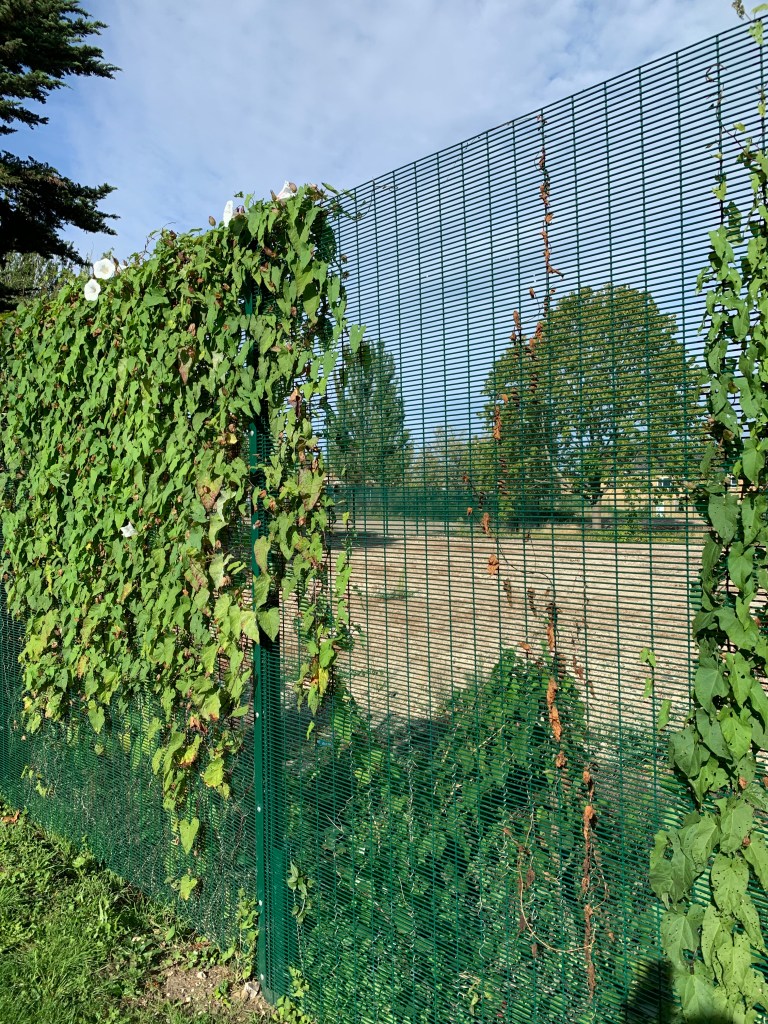
A garden run wild between the Innovation Gateway and one of the demolition sites

Thinking about all of this in direct relation to the questions I’ve outlined as my research project, it feels like the underlying question is one of whether the London Cancer Hub equates more closely to a wilderness or a garden. If it’s the former, the assumption would be that everything will grow together organically, creating its own ecosystem like a true, untampered-with, natural habitat, a wild area where species settle into their own relationships as they wander through the uncharted spaces. Or is it more like a garden? In that case, there would be dedicated horticulturalists planting, tending, pruning and nurturing amd mapping our the whole plot.

Given all the effort going in to the creation of the LCH and the high stakes of its success, my guess is that it needs to be a garden. And while there are definitely a lot of gardeners within individual areas, some of whom are also tending the boundaries, it would be interesting to understand the design for the whole landscape.

And finally – i need to think about why i am using landscape metaphors and not bodily ones!

Metaphors and concepts (2)

Today’s ideas are all about routes, travelling, and journeying. Some seem to be so commonplace that they are not really thought about as metaphors at all. And I’m also beginning to pick out metaphors that are more clearly ‘metaphorical’ and used deliberately because of their non-scientific connotations.

Concepts in a cancer context

Many of my descriptions about how these relate to cancer are drawn from a fascinating conversation with the Biology of Childhood Leukaemia team in a discussion about the role of gene TP53 in regulating cancer and the effects of hypoxia (lack of oxygen) on cancer evolution.

“Pathways”

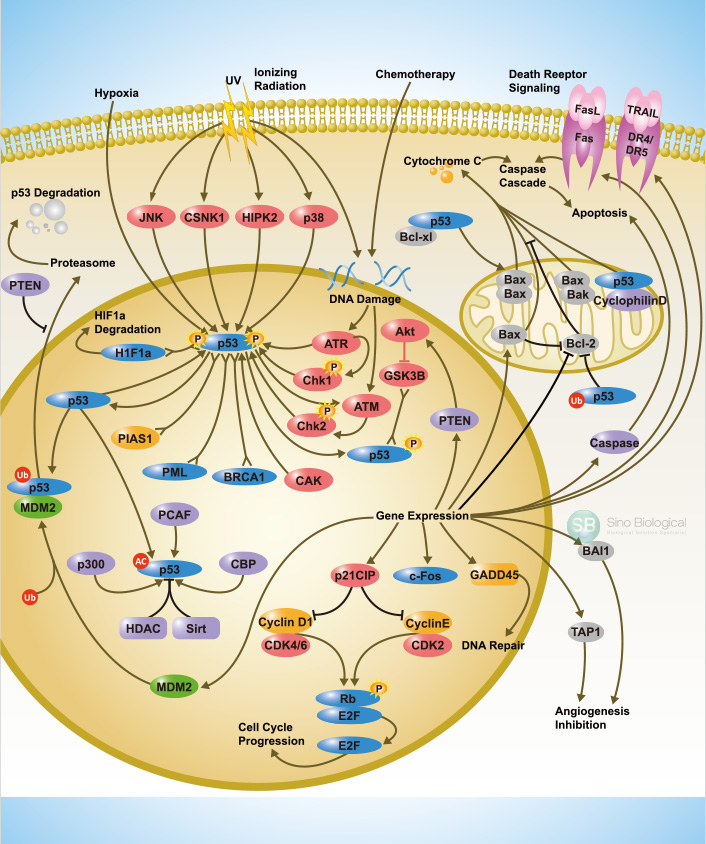
Steps in the process that govern a cellular system. For example, the TP53 pathway is the one that a cell goes through in terms of whether it is ‘allowed’ to replicate, is sent to be fixed or if it is earmarked to die.

An example of how a pathway is illustrated – this one centred on the P53 protein generated by the TP53 gene

“Gateway”

On a pathway there can be a gateway, such as the gateway that cells go through on the TP53 pathway, for example, in order to know if they should go forward to replicate or stop and die. This is a gateway that can become very ineffective in cancer – cancer cells do not die in the same way as normal cells – and may be related to changes or mutations of the TP53 gene.

“Bottleneck”

A point at which many cells fail and a few pass through such as in the toxic environment at the centre of a tumour where the majority of cells die but one or two may replicate with mutations that allow them to survive.

“Signalling”

How cancer cells communicate with surrounding cells.  Eg, they can signal to the body to grow more blood vessels to a tumour. Signals can be proximal (ie next door with surface proteins) or longer range chemical (eg with hormones etc).

“Rite of Passage”

This is a more specific metaphor drawn from one of the papers of the Childhood Leukemias Team. This metaphor represents the point of no return in cancer. Specifically, the ‘rite of passage’ in the paper refers to the the point at which the TP53 mutation allows cells to transition through EMT and launch themselves into the rest of the body. THis is the point where cancer metastasises, after which the hopes of ‘cure’ are drastically diminished. A rite of passage indeed.

How all this relates to the London Cancer Hub

While talking to ICR researchers the idea of spatial movement came up frequently, both in terms of their research and about their personal movements around the site and around London. While it seemed to me that in terms of the site, they concentrated on the ICR part of the campus, several mentioned how walking past or through hospital buildings either as part of their journey to work, or to collect samples or meet with clinicians, reminded them of the ultimate purposes of their work. This was especially true when they cam into direct contact with patients, even if this was just seeing or passing them on their own pathways,

Movement around the LCH was not the only example of establishing pathways in a very literal sense. Several researchers also told me about their regularly trodden routes around London as part of their work. For example, one scientist talked about how at one stage in her work she was travelling frequently – occasionally daily – on a circuit between the Sutton ICR, the Chelsea ICR and the Imperial College campus at White City. Interestingly, her work was heavily focused on identifying the spatial arrangements of different cell types in tumours, which are ‘barcoded’ to keep track of their position. We chatted about the possibilities of tracking the movements of researchers in a similar way. I would love to track some staff across the site and see what visual mappings came out of the exercise. I’ll be posting more about the site, its history and pathways through it in a forthcoming post…

And the ‘rite of passage’ for the LCH? I could interpret that in so many ways, so I am going to hold back and see what else emerges,

Researching concepts from cancer ecosystems

One of the initial priorities for my ‘Evolving the Ecosystem’ project was to learn about some of the key ideas and concepts that underpin the study of cancer as an ecosystem. I also want to get to grips with how they might be applied to the work of the teams at the LCH. So my first series of meetings at the LCH have been primarily focused on researchers at the Institute of Cancer Resarch (ICR) who have generously explained the thinking behind their research, sharing ideas and research papers and painstakingly explaining complex biology to a non biologist. First off, I am very grateful to all who met with me from the Biology of Childhood Leukaemia team and from the Centre for Evolution and Cancer teams and who spent time with me on my visits in late September and early October. I am not planning to record the content of each of the conversations here, just to say that they were incredibly illuminating and introduced me to a wealth of ideas around cancer ecosystems.

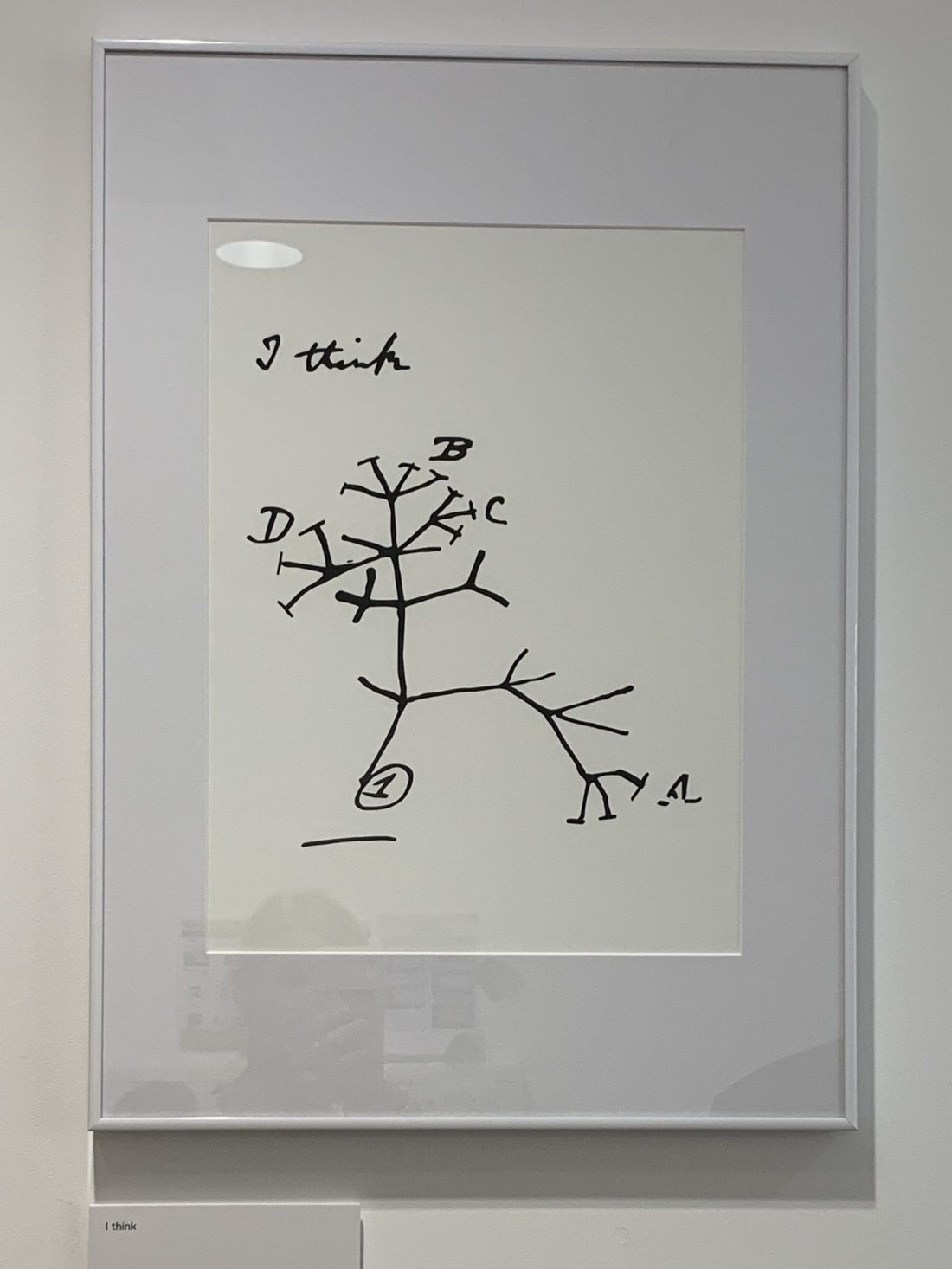
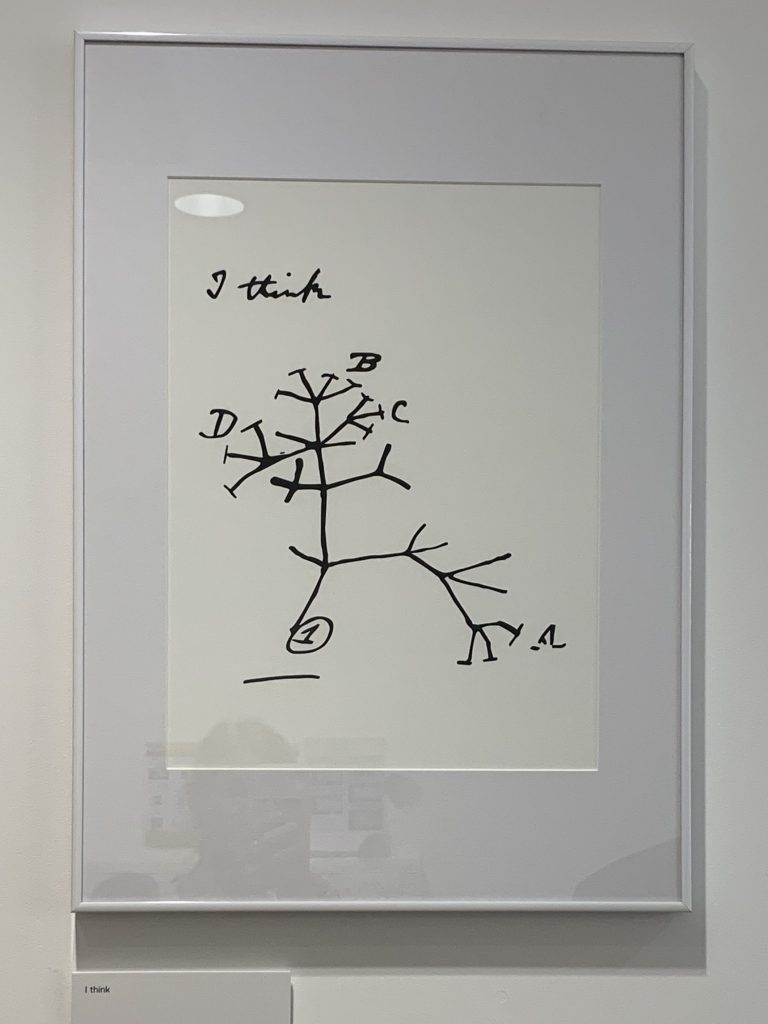
Darwin’s ‘I think’, mounted outside offices at the ICR

From these discussions I have started to draw out some of the concepts that I think may be useful going forward to inform my artwork. Scattered through future posts I will be sharing selections of the concepts and metaphors I am encountering, with my interpretation of their meaning in the context of cancer, in the context of organisation, or better still, both. I would emphasise here, though, that all the interpretations I am sharing are mine. They may be drawn from conversations with researchers and others but if they are full of errors or misunderstandings, those are entirely my own responsibility.